
.jpeg)
What is the mechanism of action of Delamanid?
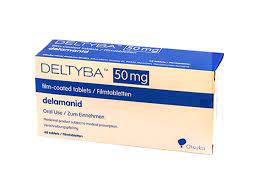
Delamanid(Delamanid) is a newer inhibitor of mycobacterial cell wall synthesis that has received conditional approval from the European Medicines Agency (EMA) for the treatment of MDR-TB. Preclinical and clinical studies have shown that Delamanid has greater potency, minimal risk of drug interactions and better tolerability.
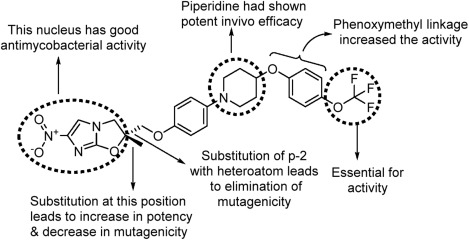
Delamanid is a prodrug that requires biotransformation by the mycobacterialF420coenzyme system, including deazoflavin-dependent nitroreductase(Rv3547), to mediate its antimycobacterial activity against growing and non-growing mycobacteria. Five coenzymesF420genes(fgd, Rv3547, fbiA, fbiB and fbiC) are thought to be mechanisms of resistance to delamanid. Upon activation, the free radical intermediate formed between deramosamine and denitroimidazole derivatives is thought to mediate the antimycobacterial effect by inhibiting the synthesis of methoxymycolic acids and ketomycolic acids, leading to the depletion of mycobacterial cell wall components and the destruction of mycobacteria. Nitroimidazoxazole derivatives are thought to generate reactive nitrogen species, including nitrogen oxides(NO). However, unlike isoniazid, delamanid does not contain α-mycolic acid.
Delamaniworks by blocking the production of methoxy and ketomycolic acids and the production of nitrous oxide through the mycobacterialF420pathway. It works by blocking the formation of mycolic acid, which is required for the survival of mycobacteria, it requires activation of the mycobacterialF420system.
There is an original research version in Russia, and each box is about 1 more than a thousand. If you want to get more high-quality information, you can contact Yaode, and Yaode will do its best to help you learn more about high-quality overseas drugs.
[ 免责声明 ] 本页面内容来自公开渠道(如FDA官网、Drugs官网、原研药厂官网等),仅供持有医疗专业资质的人员用于医学药学研究参考,不构成任何治疗建议或药品推荐。所涉药品可能未在中国大陆获批上市,不适用于中国境内销售和使用。如需治疗,请咨询正规医疗机构。本站不提供药品销售或代购服务。


