
.jpeg)
Gilteritinib combined with chemotherapy is safe and effective in the treatment of newly diagnosed acute myeloid leukemia
According to the results of a phase 1b trial (NCT02236013), adding the type 1 FLT3 inhibitor Gilteritinib to induction and consolidation chemotherapy, followed by maintenance gilitinib monotherapy, is safe and tolerable in patients with newly diagnosed acute myeloid leukemia (AML), with good initial efficacy.
Study results show thatPatients with FLT3 mutation disease (n=36) achieved a comprehensive complete response (CRc) rate of 89%, including an 83% complete response (CR) rate on day 56. Patients with FLT3 wild-type disease (n=22) experienced a CRc rate of 50%, including a 56-day CR rate of 41%. The median overall survival (OS) of the FLT3 mutant and FLT3 wild-type subgroups was 46.1 months and 38.7 months, respectively. No significant differences were observed between patients who received induction with idarubicin and daunorubicin (P=0.2) or those who initiated geritinib treatment on days 4 and 8 (P=0.2).
The study consists of 4 parts, including studies of dose escalation, dose expansion, anthracycline and giritinibalternating dosing regimens. In part 4, geritinib was evaluated after continuous dosing during the consolidation phase. In the dose-escalation portion of the trial, 21 patients were enrolled, and one patient receiving 40 mg of gilitinib daily experienced two dose-limiting toxicities (DLTs), both attributable to excessive anthracycline exposure. Additional DLTs occurred in 2 patients treated at the 200 mg dose level: fatal neutropenic colitis and delayed count recovery.
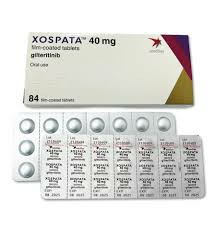
In the dose-expansion phase,58 patients were treated at the maximum tolerated dose (MTD) of 120 mg daily. 83% of patients took all planned doses of gilitinib, and the remaining 10 patients took an average of 82% of planned doses. The 60-day mortality rate was 1.3%, with 3 patients dying from fungal sepsis (n=1) and infection (n=2) during the induction period.
The U.S. Food and Drug Administration (FDA) approved giritinib for the treatment ofAdult patients with relapsed or refractory AML mutated in FLT3. This indication is supported by interim analysis results from the phase 3 ADMIRAL trial (NCT02421939), which showed that at a median follow-up of 4.6 months (range 2.8-15.8), FLT3 patients treated with geritinib Adult patients with relapsed/refractory AML with ITD, D835, or I836 mutations Additionally, 31.1% of patients (n = 106) who were red blood cell (RBC) and/or platelet transfusion dependent achieved independence on RBC and platelet transfusions during any 56-day period after baseline.
Eligible patients must be 18 years of age or older and have newly diagnosed and newly treated AML documented within 28 days of registration. In the dose-escalation phase (Part 1), patients received 40 mg, 80 mg, 120 mg, or 200 mg of gilritinib once daily on Day 4 for 14 days, followed by intravenous idarubicin at 12 mg/m on Days 1 to 3 and cytarabine at 100 mg/m on Days 1 to 7. The dose expansion portion (Part 2) treated patients with the MTD of gilitinib (120 mg). Part 3 evaluated 2 groups of patients - examining alternative induction regimens with gilitinib starting on days 8 and 4, and comparing daunorubicin to idarubicin. Part 4 evaluates the effect of continuous exposure to giritinib during consolidation.
In all parts of the trial, patients entered the maintenance phase after induction and consolidation. Maintenance therapy consisted of geritinib at the indicated dose daily for a 28-day cycle, for a total of 26 cycles. Interruption of allogeneic transplantation is allowed. The median age of response-evaluable patients (n=58) who received MTD was 59 years (range, 24-77 years). The majority of patients had intermediate cytogenetic risk (86%) and were male (64%). Half of the patients in the active population received an allogeneic hematopoietic stem cell transplant during the study or follow-up period. FLT3 status included wild type (38%), ITD mutation (43%), D835 mutation (9%), both ITD and D835 mutations (10%), and NPM1 mutation (33%). Most patients treated at MTD received a single course of induction (95%). Among patients who received 2 courses of induction therapy (n=3), 2 died due to infection and 1 did not respond and dropped out.
In terms of recovery of peripheral blood counts, The 15 patients who achieved CR did not recover neutrophils and platelets until 42 days after induction, and the median recovery time after the last bone marrow assessment was 13 days (range 5-20 days). On day 42, the CR rate was 27% in FLT3 wild-type patients and 53% in FLT3 mutant patients. For patients who received gitinib in the MTD, the median time to recovery from CR to best response after induction was 41 days (interquartile range, 35-48 days) (n=39). The majority of these patients (n=27) underwent consolidation therapy, with a calculated median time to recovery of 36 days.
Among the safe people (n=78), most patients experienced grade 3/4 treatment-emergent adverse reactions (TEAE; 93.6%). The most common grade 3/4 TEAEs included febrile neutropenia (66.7%), thrombocytopenia (20.5%), neutropenia (17.9%), and anemia (15.4%).
[ 免责声明 ] 本页面内容来自公开渠道(如FDA官网、Drugs官网、原研药厂官网等),仅供持有医疗专业资质的人员用于医学药学研究参考,不构成任何治疗建议或药品推荐。所涉药品可能未在中国大陆获批上市,不适用于中国境内销售和使用。如需治疗,请咨询正规医疗机构。本站不提供药品销售或代购服务。


