
.jpeg)
The efficacy and role of lorlatinib, a must-read for patients!
Lorlatinib is a new generation of tyrosine kinase inhibitor, mainly used to treat ALK (tyrosine kinase) and ROS1 (ROS1kinase) mutated non-small cell lung cancer (NSCLC). Its unique mechanism of action and broad indications in cancer treatment make lorlatinib an important and innovative treatment option for lung cancer patients with specific gene mutations.
1. TargetingALK and ROS1 mutations: The main effect of lorlatinib is to prevent the growth and spread of lung cancer by inhibiting the proliferation of cancer cells caused by ALK and ROS1 mutations. Mutations in these two genes are common in non-small cell lung cancer and are key factors driving tumor growth. Lorlatinib effectively inhibits tumor progression by precisely interfering with these mutations, causing cancer cells to lose their proliferation signals.
2. Highly selective targeting: Compared with early ALK inhibitors, lorlatinib is more selective and can target a variety of ALK mutants, including those that are resistant to traditional treatments. This allows lorlatinib to show better efficacy in patients with highly drug-resistant lung cancer, providing a glimmer of hope for this special patient group.
3. Overcoming drug resistance: Since patients may develop resistance to traditional ALK inhibitors during long-term treatment, the emergence of lorlatinib fills this therapeutic gap. Its mechanism of action overcomes resistance issues seen with previous treatments, providing an effective treatment option for patients whose disease has relapsed after other treatment modalities.
4. Broad coverage of multiple targets: Lorlatinib can not only target ALK mutations, but also effectively inhibit ROS1mutation, making it a multi-target broad-spectrum inhibitor. This broad coverage enables it to show excellent adaptability in the face of different types of genetic mutations and variations, providing patients with a more comprehensive treatment effect.
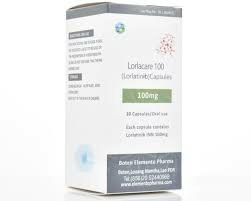
5. Enhance patient survival: Clinical trials have shown that lorlatinib can significantly prolong the progression-free survival of patients with ALK and ROS1 -positive non-small cell lung cancer (Progression-Free Survival, PFS). This means that patients using lorlatinib can maintain better survival conditions for a relatively longer period of time, delay the progression of the disease, and improve the patient's quality of life.
6. Relatively well tolerated: Compared with some other treatments, lorlatinib appears to be relatively well tolerated. Common side effects, such as mild nausea, fatigue and headache, are usually manageable and reversible. This provides patients with a more comfortable treatment experience and increases their compliance with treatment.
7. The pioneer of personalized treatment: The emergence of lorlatinib represents a new development in personalized treatment. By gaining a deeper understanding of a patient's genetic mutations, doctors can more accurately select appropriate treatment options to maximize treatment effectiveness. This also provides a new direction for the future development of cancer treatment.
8. Clinical prospects: The successful application of lorlatinib provides new treatment options for lung cancer patients, and also provides inspiration for the research and development of other cancer treatments. In the future, with the continuous advancement of science and technology, more treatment methods based on individual genetic characteristics are expected to be applied in clinical practice, bringing better survival and quality of life to patients.
Overall, as an advanced targeted drug, lorlatinib brings new hope to patients with ALK and ROS1 mutant non-small cell lung cancer with its unique mechanism of action, wide range of indications and good tolerability. Its successful application in clinical treatment marks a new era of personalized treatment and lays the foundation for future innovation and progress in cancer treatment.
Lorlatinib has been launched in China and is included in medical insurance. Patients can purchase it domestically, but the price is relatively high, about 10,000 to 20,000 yuan. Please consult the local hospital pharmacy for details. There are original lorlatinib drugs and cheaper generic drugs abroad. The cheaper ones are the original drug from Turkey, which costs more than 1,000 yuan, and the original drug from Hong Kong, China, which costs about 30,000 yuan. Generic drugs are mainly generic drugs from Laos and Bangladesh. The price is about several thousand yuan, and the ingredients of the original drugs and generic drugs are basically the same.
[ 免责声明 ] 本页面内容来自公开渠道(如FDA官网、Drugs官网、原研药厂官网等),仅供持有医疗专业资质的人员用于医学药学研究参考,不构成任何治疗建议或药品推荐。所涉药品可能未在中国大陆获批上市,不适用于中国境内销售和使用。如需治疗,请咨询正规医疗机构。本站不提供药品销售或代购服务。


