
.jpeg)
Upadacitinib Instructions
1. Indications
1.Rheumatoid arthritis
Upadacitinib is indicated for the treatment of adults with moderately to severely active rheumatoid arthritis who have an inadequate response to or intolerance to one or more TNF blockers.
●Restrictions on use:It is not recommended to combineupatinibwith otherJAKinhibitors, biological disease-modifying antirheumatic drugs pan>(DMARDs)or potent immunosuppressives(such as azathioprine and cyclosporine) used in combination.
2.Psoriatic Arthritis
Upadatinib is indicated for the treatment of adult patients with active psoriatic arthritis who have an inadequate response to or are intolerant to one or more TNF blockers.
●Restrictions on use:It is not recommended to combineupatinibwith otherJAKinhibitors, biologicalDMARDsor potent immunosuppressives(such as azathioprine and cyclosporine) used in combination.
3.Atopic dermatitis
Upadatinib is indicated for the treatment of adult and pediatric patients 12 years of age and older who have refractory, moderate to severe atopic dermatitis whose disease is not adequately controlled by other systemic medications (including biologics) or whose use is not recommended.
●Restrictions on use:The concomitant use ofupadatinibwith otherJAKinhibitors, biological immunomodulators, or other immunosuppressants is not recommended.
4.Ulcerative colitis
Upadatinib is indicated for the treatment of adult patients with moderately to severely active ulcerative colitis who have an inadequate response to or are intolerant to one or more TNF blockers.
●Restrictions of use:It is not recommended to use upatinib in combination with other JAKinhibitors, biological therapies for ulcerative colitis, or strong immunosuppressives (such as azathioprine and cyclosporine).
5.Crohn’s disease
Upadatinib is indicated for the treatment of adult patients with moderately to severely active Crohn's disease who have an inadequate response to or are intolerant to one or more TNF blockers.
●Restrictions on use:It is not recommended to combineupatinibwith otherJAKA combination of inhibitors, biological therapies for Crohn's disease, or potent immunosuppressants (such as azathioprine and cyclosporine).
6.Ankylosing spondylitis
Upadatinib is indicated for the treatment of adult patients with active ankylosing spondylitis who have an inadequate response to or are intolerant to one or more TNF blockers.
●Restrictions on use:It is not recommended to combineupatinibwith otherJAKinhibitors, biologicalDMARDsor potent immunosuppressives(such as azathioprine and cyclosporine) used in combination.
7.Nonxline photography axial spondyloarthritis
Upadatinib is indicated for the treatment of adults with active non-radiographic axial spondyloarthritis who have objective signs of inflammation and have an inadequate response to or intolerance to TNF blocker therapy.
●Restrictions on use:It is not recommended to use upatinibOtherJAKinhibitors, biologicalDMARDsor potent immunosuppressives(such as azathioprine and cyclosporine) used in combination.
2. Usage and dosage
1.Rheumatoid arthritis, psoriatic arthritis, ankylosing spondylitis and non-xaxial spondyloarthritis:
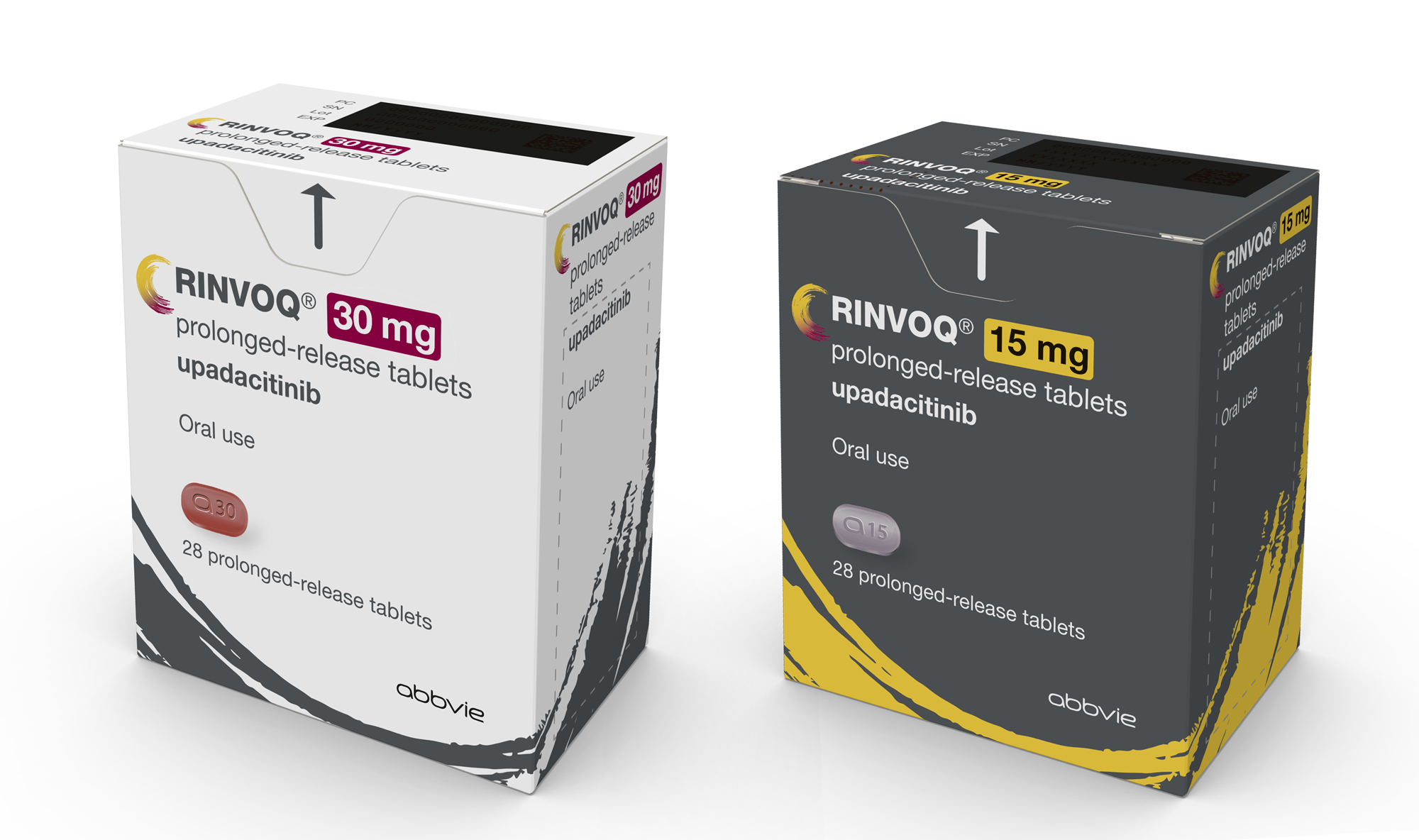
The recommended dose is 15 mg once daily.
2.Atopic dermatitis
Pediatric patients 12years and older weighing at least 40kg and adults 65years :Initiate treatment with 15mg orally once daily. If an adequate response is not achieved, consider increasing the dose to 30 mg once daily. Adults 65years and older:The recommended dose is 15 mg once daily. Severe kidney damage: The recommended dose is 15 mg once daily.
3.Ulcerative colitis
Adults:The recommended induction dose is 45 mg once daily for 8 weeks. The recommended maintenance dose is 15 mg once daily. For patients with refractory, severe, or extensive disease, a maintenance dose of 30 mg once daily may be considered. Discontinue upadacitinib if adequate therapeutic response is not achieved at the 30 mg dose. Use the lowest effective dose needed to maintain response.
4.Crohn’s disease
Adults:The recommended induction dose is 45mg once daily for 12 weeks. The recommended maintenance dose is 15 mg once daily. For patients with refractory, severe, or extensive disease, consider once dailyMaintenance dose of 30 mg. If 30 mg dosage does not achieve an adequate therapeutic response, discontinue upatinib. Use the lowest effective dose needed to maintain response.
Three. Dosage form and strength
Extended-release tablets: 15mg, 30mg and 45mg.
Four. Warnings and Precautions
1.Severe infection:Avoid use in patients with active severe infection (including local infection).
2.Hypersensitivity:Severe allergic reactions (such as anaphylaxis) have been reported. Discontinue use if severe allergic reaction occurs.
3.Gastrointestinal perforation:Monitor patients at risk of gastrointestinal perforation and promptly evaluate symptomatic patients.
4.Laboratory abnormalities:Monitoring is recommended due to potential changes in lymphocytes, neutrophils, hemoglobin, liver enzymes, and lipids.
5.Embryonic-Fetal Toxicity:Based on animal studies, may cause harm to the fetus. Inform female patients of the potential reproductive risks to the fetus and use effective contraception.
6.Vaccination:Avoid use with live vaccines.
Five. adverse reactions
Rheumatoid arthritis, psoriatic arthritis, onychomycosis, and nradiographyaaxialsorbital arthritis Adverse reactions(≥ 1%)for:Upper respiratory tract infection, shingles, herpes simplex, bronchitis, nausea, cough, fever, acne, and headache.
AtopydDermatitis:Adverse reactions(≥ 1%)Yes:Upper respiratory tract infection, acne, herpes simplex, headache, elevated blood creatine phosphokinase, cough, hypersensitivity reactions, folliculitis, nausea, abdominal pain, pyrexia, weight gain, herpes zoster, influenza, fatigue, neutropenia, myalgia, and influenza-like illness.
Ulcerative colitis:Adverse reactions reported during induction or maintenance(≥ 5%)are:Upper respiratory tract infection, elevated blood creatine phosphokinase, acne, neutropenia, elevated liver enzymes, and rash.
Crohn's disease:Adverse reactions reported during induction or maintenance(≥ 5%)Yes:Upper respiratory tract infection, anemia, pyrexia, acne, herpes zoster, and headache.
6. drug interactions
PotentCYP3A4Inhibitors:See full prescribing information for dosage adjustments in patients with atopic dermatitis, ulcerative colitis, and Crohn's disease.
StrongCYP3A4Inducers:Coadministration of RINVOQ with strong CYP3A4 inducers is not recommended.
The ingredients and dosage specifications of the original drug and the generic drug are the same. The retail price of Bangladesh Yaopin International Pharmaceutical is more than 100 for 30 tablets of 15mg7. If you want to get more high-quality information, you can contact Yaode, and Yaode will do its best to learn more about high-quality overseas drugs for you.
xa0
[ 免责声明 ] 本页面内容来自公开渠道(如FDA官网、Drugs官网、原研药厂官网等),仅供持有医疗专业资质的人员用于医学药学研究参考,不构成任何治疗建议或药品推荐。所涉药品可能未在中国大陆获批上市,不适用于中国境内销售和使用。如需治疗,请咨询正规医疗机构。本站不提供药品销售或代购服务。


