
.jpeg)
Combining Gilteritinib and Allo-HSCT improves survival in patients with FLT3-mutated AML
Results from a real-world study evaluating the combination of gilteritinib and allogeneic hematopoietic stem cell transplantation (Allo-HSCT) show that adding the drug improves outcomes in patients with relapsed/refractory FLT3-mutated acute myeloid leukemia (AML). Specifically, giritinibmay be a promising bridge toAllo-HSCT, with patients in studies who received Allo-HSCT followed by geritinibmaintenance therapy having improved survival rates. Patients who received Allo-HSCT followed by maintenance therapy with geritinib had the longest overall survival, while patients who received giritinib alone had the shortest overall survival.
A total of 156 patients from 25 blood centers around the world were included in the study. 69 patients had primary refractory disease and 87 patients had relapse. Patients with FLT3 internal tandem duplication (FLT3-ITD) mutations or FLT3 tyrosine kinase domain (FLT3-TKD) mutations were stratified into 3 groups: geritinib monotherapy (n=1 16), giritinibplus allogeneicHSCT (n=23) and allogeneic HSCT plusgiritinibmaintenance (n=17). For patients who received geritinib and then received allogeneic HSCT, the 2-year overall survival (OS) rate for allogeneic HSCT was 75% (95% CI, 59 %-97%), the 2-year OS rate of patients who received geritinib maintenance therapy after Allo-HSCT was 90% (95% CI, 73%-100%). The two-year radiographic progression-free survival (rFS) was lowest in the geritinib-only group (24%; 95% CI, 15%-37%). Better rates were observed when geritinib was followed by Allo-HSCT (44%; 95% CI, 18%-100%) and as maintenance after Allo-HSCT (74%; 95% CI, 52%-100%).
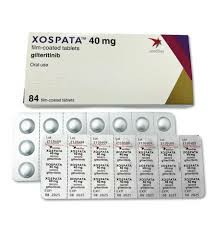
The median age of patients was58.5 years old (range 21-84 years), majority female (57.1%). Most patients had 0 (53.8%) or 1 (34.6%) patients who had previously received FLT3 inhibitor treatment. Most patients were classified as intermediate or poor risk at first diagnosis, and 88% were considered candidates for intensive induction therapy. 23.1% of patients (36/156) received geritinib before Allo-HSCT treatment, and 10.9% (17/156) of patients received geritinib as maintenance therapy after Allo-HSCT treatment. The duration of geritinibtreatment before Allo-HSCT was 2.35 months (range 0.66-30.83), and the geritinibmaintenance time after Allo-HSCT was 16.6 months (range 1.87-28.1).
The OS of the gilitinib group alone was 5.19 months (range 0.62-60.17), the Allo-HSCT group was 10.35 months (range 1.74-29.02), and the maintenance group was 16.79 months (range 1.28-33.26) (P<0.001). The event-free survival (EFS) of the monotherapy group was 3.83 months (range 0.49-60.17), the Allo-HSCT group was 10.35 months (range 1.74-29.02), and the maintenance group was 14.85 months (range 0.13-33.26) (P<0.001). The CR/CRi of the monotherapy group was 37.1% (43/116), that of the Allo-HSCT treatment group was 34.8% (8/23), and that of the maintenance treatment group was 70.6% (12/17) (P=0.0027).
The researchers focused on patients who received giritiniband subsequentAllo-HSCT, as well as patients who receivedgiritinibwithoutAllo-HSCT. Compared with patients who received giritinib alone, patients who received geritinib followed by Allo-HSCT had significantly improved OS, with a hazard ratio of 3.7 [95% CI, 1.7-7.9; P<0.001]. Similar outcome assessments were made for EFS, which also showed a significant improvement in the Allo-HSCT group, with a hazard ratio of 5.6 [95% CI, 2.8-11.4; P<0.0001]. Multivariate analysis showed that treatment-related acute myeloid leukemia was an independent risk factor for worse OS, and high Karnofsky score was associated with better EFS.
When comparing the 2 geritinib monotherapy subgroups (ie, patients who had previously received an allogeneic hematopoietic stem cell transplant and those who had not), the analysis showed no significant difference in overall survival between them. The 1-year overall survival rates were 38% and 22% respectively. Higher Karnofsky score seems to be an independent factor for better OS and EFS, and previous Allo-HSCT is beneficial for improving EFS. Although patients with FLT3-mutated relapsed/refractory AML have a poor prognosis, this condition can be alleviated by geritinib/Allo-HSCT combination therapy, and geritinib is a promising bridge to Allo-HSCT.
[ 免责声明 ] 本页面内容来自公开渠道(如FDA官网、Drugs官网、原研药厂官网等),仅供持有医疗专业资质的人员用于医学药学研究参考,不构成任何治疗建议或药品推荐。所涉药品可能未在中国大陆获批上市,不适用于中国境内销售和使用。如需治疗,请咨询正规医疗机构。本站不提供药品销售或代购服务。


