
.jpeg)
Efficacy of Ustekinumab
Ustekinumab (Ustekinumab) is used to control inflammatory diseases such as plaque psoriasis, psoriatic arthritis, Crohn's disease, and ulcerative colitis.
1. Plaque psoriasis:
In two major studies involving 1,996 adult patients, ustekinumab was more effective than placebo (dummy treatment) in treating moderate to severe plaque psoriasis. More than half of these patients are ineffective, intolerant, or intolerant of other treatments for psoriasis. The primary measure of effectiveness is the number of patients whose symptom scores improved by 75% or more after 12 weeks. Combining the results of the two main studies in adults, after 12 weeks, symptoms improved in approximately 69% of patients treated with ustekinumab and in approximately 3% of patients treated with placebo.
Two studies were conducted in children with moderate to severe plaque psoriasis. The primary measure of effectiveness in both studies was the number of patients whose symptom scores improved after 12 weeks of treatment. The first study involved 110 children aged 12 to 18 years. The children received placebo or ustekinumab. Approximately 69% of children who received ustekinumab achieved a clear or minimal score, compared with only 5% of patients who received placebo. The second study involved 44 children aged 6-11 years. All children received ustekinumab, which was not comparable to other treatments. About77% of the children achieved passing or minimum scores.
2. Psoriatic arthritis:
In the treatment of active psoriatic arthritis, ustekinumab was compared with placebo in 2 major studies involving a total of 927 adult patients whose disease had not been adequately controlled by prior treatments. In both studies, the primary measure of effectiveness was the number of patients whose symptom scores improved after 24 weeks. In the first study, about 42% of patients taking ustekinumab 45 mg and 50% of those taking 90 mg had an improvement in symptom scores, compared with about 23% of patients taking a placebo. In the second study, about 44% of patients who took any dose of ustekinumab saw symptom scores improve, compared with about 20% of those who took placebo.
3. Crohn’s disease (Crohn’s disease):
In the treatment of Crohn's disease, ustekinumab (administered by infusion) was compared with placebo in 2 major studies involving 1,369 patients with moderately to severely active disease. The primary measure of effectiveness was the number of patients whose symptom scores improved 6 weeks after infusion. In the first study, symptom scores improved in approximately 34% of patients who received ustekinumab, compared with 21% of patients who received placebo. In the second study, the figure was 56% for ustekinumab and 29% for placebo.
Some patients in the 2 main studies received ustekinumab (subcutaneous injection) or placebo every 8 or 12 weeks. Forty-four weeks after starting treatment via subcutaneous injection, 53% of patients who received ustekinumab every 8 weeks and 49% of patients who received ustekinumab every 12 weeks experienced significant reductions in Crohn's disease symptoms, compared with 36% of patients in the placebo group.
4. Ulcerative colitis:
In the treatment of ulcerative colitis, ustekinumab (administered by infusion) was compared with placebo in two major studies. The first study involved 961 patients with moderately to severely active disease. The primary measure of effectiveness is the number of patients whose symptoms are gone or nearly gone 8 weeks after infusion. Symptoms were resolved or nearly resolved in 16% of patients who received ustekinumab, compared with 5% of patients who received placebo.
In the second study, a total of523 patients whose symptoms improved in the first study received ustekinumab, either every every 8 or 12 weeks as a subcutaneous injection or placebo. Forty-four weeks after starting treatment with a subcutaneous injection, 44% of patients in the ustekinumab every 8 weeks group and 38% of patients in the ustekinumab every 12 week group had no or almost no ulcerative colitis symptoms, compared with 24% of patients in the placebo group.
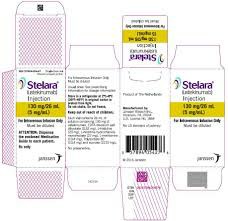
The generic drug Ustekinumab has been launched in China and is included in the medical insurance, and is only reimbursed for patients who meet the indications. The price of the 130mg/26ml intravenous injection preparation may be more than 5,000 yuan per box, and the price of the 90mg: 1.0ml*1 subcutaneous injection preparation may be more than 8,000 yuan per box. The price of the 130mg/26ml intravenous injection preparation of Ustekinumab sold overseas may be more than 2,000 US dollars per box, and the price of 45mg: 0.5ml*1 subcutaneous injection preparation per box may be more than 10,000 US dollars. There are currently no generic versions of ustekinumab produced in other overseas countries.
[ 免责声明 ] 本页面内容来自公开渠道(如FDA官网、Drugs官网、原研药厂官网等),仅供持有医疗专业资质的人员用于医学药学研究参考,不构成任何治疗建议或药品推荐。所涉药品可能未在中国大陆获批上市,不适用于中国境内销售和使用。如需治疗,请咨询正规医疗机构。本站不提供药品销售或代购服务。


