
.jpeg)
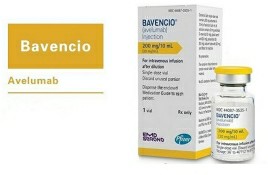
Instructions for Avelumab
1. Name: Avelumab, Avelumab,
Product name: BAVENCIO,BAVENCIO
2. Indications:
1. Merkel cell carcinoma (MCC): Avelumab is indicated for the treatment of adult and pediatric patients 12 years of age and older with metastatic Merkel cell carcinoma.
2. Urothelial carcinoma (UC):
(1) First-line maintenance treatment: Avelumab is indicated for maintenance treatment of patients with locally advanced or metastatic urothelial carcinoma who have not progressed on first-line platinum-containing chemotherapy;
(2) Prior Treatment: Avelumab is indicated for the treatment of patients with locally advanced or metastatic urothelial carcinoma who have disease progression during or after platinum-containing chemotherapy; or who have disease progression within 12 months of neoadjuvant or adjuvant platinum-containing chemotherapy.
3. Renal cell carcinoma (RCC): Avelumab combined with axitinib is suitable for first-line treatment of patients with advanced renal cell carcinoma.
3. Usage and dosage:
1. Preoperative medication: Before the first 4 infusions of avelumab, the patient was given antihistamines and acetaminophen. Premedication should be used with subsequent avelumab doses based on clinical judgment and the presence/severity of previous infusion reactions.
2. Recommended dose: For patients with Merkel cell carcinoma (MCC), urothelial carcinoma (UC), and renal cell carcinoma (RCC), the recommended dose is 800 mg intravenously infused over 60 minutes every 2 weeks until the disease worsens or unacceptable toxicity occurs.
For the treatment of renal cell carcinoma, take axitinib 5 mg orally twice daily with or without food until disease progression or unacceptable toxicity occurs. When the two drugs are used together, consideration may be given to increasing the dose of axitinib above the initial dose of 5 mg at intervals of two weeks or longer.
3. Dose adjustment: It is not recommended to reduce the dose of avelumab. In general, avelumab should be discontinued for severe (Grade 3) immune-mediated adverse reactions. Permanently discontinue avelumab due to life-threatening (Grade 4) immune-mediated adverse reactions, recurrent severe (Grade 3) immune-mediated reactions requiring systemic immunosuppressive therapy, or inability to reduce the corticosteroid dose to 10 mg or less of prednisone or equivalent within 12 weeks of starting corticosteroids.
4. Adverse reactions:
In clinical studies of avelumab, the most common adverse reactions (≥20%) in patients treated with avelumab were fatigue, musculoskeletal pain, infusion-related reactions, rash, urinary tract infection, nausea, constipation, cough, and diarrhea; the most common adverse reactions (≥20%) in patients treated with axitinib were Common adverse reactions (≥20%) include diarrhea, fatigue, hypertension, musculoskeletal pain, nausea, mucositis, palmar and plantar red blood cell paresthesia, dysphonia, decreased appetite, hypothyroidism, rash, hepatotoxicity, cough, dyspnea, abdominal pain, and headache.
5. Storage:
Avelumab is a sterile, preservative-free, clear, colorless to yellowish intravenous infusion solution supplied as 200 mg/10 mL (20 mg/mL) single-dose vials, individually packaged in a carton and stored refrigerated in the original packaging at 36°F to 46°F (2°C to 8°C) to avoid light. Do not freeze or shake vial.
Dilute avelumab should be refrigerated at room temperature to 77°F (25°C) for no more than 4 hours from the time of dilution; or refrigerated at 36°F to 46°F (2°C to 8°C) for no more than 24 hours. If refrigerated, allow dilute solution to come to room temperature before administration.
6. Special groups:
1. Women: According to its mechanism of action, avelumab may cause harm to the fetus when pregnant women take it. Therefore, it is recommended that females of reproductive potential use effective contraception during treatment with the drug and for at least 1 month after the last dose; lactating women are advised not to breastfeed during treatment with the drug and for at least 1 month after the last dose.
7. Mechanism of action:
PD-L1 can be expressed on tumor cells and tumor-infiltrating immune cells, and can help suppress anti-tumor immune responses in the tumor microenvironment. Binding of PD-L1 to the PD-1 and B7.1 receptors found on T cells and antigen-presenting cells inhibits cytotoxic T cell activity, T cell proliferation, and cytokine production. Avelumab binds to PD-L1 and blocks the interaction between PD-L1 and its receptors PD-1 and B7.1. This interaction releases the inhibitory effect of PD-L1 on immune responses, leading to the restoration of immune responses, including anti-tumor immune responses. Avelumab has also been shown to induce antibody-dependent cell-mediated cytotoxicity (ADCC) in vitro. In syngeneic mouse tumor models, blocking PD-L1 activity resulted in decreased tumor growth.
[ 免责声明 ] 本页面内容来自公开渠道(如FDA官网、Drugs官网、原研药厂官网等),仅供持有医疗专业资质的人员用于医学药学研究参考,不构成任何治疗建议或药品推荐。所涉药品可能未在中国大陆获批上市,不适用于中国境内销售和使用。如需治疗,请咨询正规医疗机构。本站不提供药品销售或代购服务。


