
.jpeg)
Rituximab mechanism of action
Rituximab is a monoclonal antibody drug used to treat certain autoimmune diseases and cancers, used to treat non-Hodgkin lymphoma, chronic lymphocytic leukemia Blood disorders (non-elderly patients), rheumatoid arthritis, granulomatosis with polyangiitis, idiopathic thrombocytopenic purpura, pemphigus vulgaris, myasthenia gravis, and Epstein-Barr virus-positive mucocutaneous ulcers, given by slow intravenous infusion.
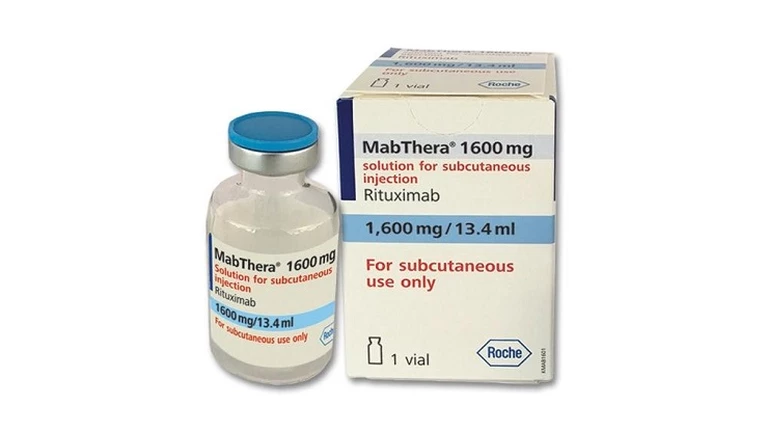
Rituximab is a monoclonal antibody. Rituximab products target the CD20antigen expressed on the surface of proBlymphocytes and matureBlymphocytes. Rituximab products mediate lysis of B cells after binding to CD20. Possible mechanisms of cytolysis include complement-dependent cytotoxicity (CDC) and antibody-dependent cell-mediated cytotoxicity (ADCC). bcells are thought to play a role in the pathogenesis of rheumatoid arthritis (RA) and related chronic synovitis. In this case, B cells may play a role at multiple sites in the autoimmune/inflammatory process, including through the production of rheumatoid factor (
[ 免责声明 ] 本页面内容来自公开渠道(如FDA官网、Drugs官网、原研药厂官网等),仅供持有医疗专业资质的人员用于医学药学研究参考,不构成任何治疗建议或药品推荐。所涉药品可能未在中国大陆获批上市,不适用于中国境内销售和使用。如需治疗,请咨询正规医疗机构。本站不提供药品销售或代购服务。


