
.jpeg)
The difference between larotinib and anlotinib
Larotrectinib) and anlotinib (Anlotinib) are two different anti-cancer drugs with different mechanisms of action, indications and clinical applications. Here are their main differences:
Larotrectinib (Larotrectinib):
1. Mechanism of action:
Targeting: Larotinib is a TRK (neuroprimitive ectodermal tumor) inhibitor. Its main role is to inhibit the activity of abnormal TRK proteins in cancer patients with TRK gene fusions. By targeting this key signaling pathway, larotrectinib inhibits the growth and differentiation of cancer cells.
Individualized treatment: The uniqueness of larotrectinib lies in its concept of individualized treatment. By conducting genetic testing to determine whether a patient has a TRK gene fusion, it can be more accurately determined whether the patient is suitable for larotrectinib treatment.
2. Indications:
Main indications: Larotinib is mainly suitable for cancer patients with TRK gene fusion, including children and adults. It has been approved for use in children with soft tissue sarcoma and thyroid cancer.
3. Clinical application:
Clinical research: The research of larotrectinib mainly focuses on patients withTRK gene fusion, and clinical trial data show that it has achieved significant efficacy in these patients. However, the efficacy of larotrectinib in other types of cancer is still being studied.
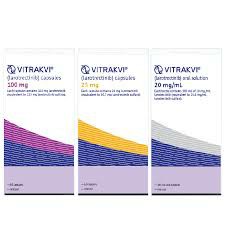
Anlotinib (Anlotinib):
1. Mechanism of action:
Multi-target inhibition: Anlotinib is a multi-target inhibitor that mainly achieves multi-faceted intervention in cancer cells by inhibiting angiogenesis, inhibiting the proliferation of tumor cells and inducing apoptosis.
2. Indications:
Multiple indications: Anlotinib has a relatively wide range of indications, mainly including advanced non-small cell lung cancer, soft tissue sarcoma, thyroid cancer and other types of cancer. Compared with larotinib, anlotinib has more diverse indications.
3. Clinical application:
Multiple types of cancer: Anlotinib has shown certain efficacy in various types of cancer such as advanced non-small cell lung cancer and soft tissue sarcoma. As a multi-target inhibitor, it has a wider range of clinical applications and is suitable for some patients who have no other treatment options.
Common points:
Although larotinib and anlotinib differ in their mechanisms of action, indications, and clinical applications, they are both treatment options for patients with specific types of cancer. When using these drugs, doctors typically individualize treatment planning based on the patient's specific condition, tumor type, and treatment goals. In addition, both drugs represent the evolving direction in the field of anti-cancer treatment, emphasizing the concepts of individualized and precise treatment.
Larotrectinib has been launched in China and has not yet been included in medical insurance. Since it has not been launched in China for a long time, it may be difficult to purchase it in hospitals. For specific conditions, it is recommended to consult the local hospital pharmacy. In foreign markets, larotinib has two options: original drug and generic drug. Original drugs include the German version, the American version, the European version and the Hong Kong version, and the price is about 10,000 to 20,000 yuan. In comparison, generic drugs are much cheaper. There are Lao and Bangladeshi versions of generic drugs, and the price is around two to three thousand. It is worth noting that the ingredients of original drugs and generic drugs are basically the same.
[ 免责声明 ] 本页面内容来自公开渠道(如FDA官网、Drugs官网、原研药厂官网等),仅供持有医疗专业资质的人员用于医学药学研究参考,不构成任何治疗建议或药品推荐。所涉药品可能未在中国大陆获批上市,不适用于中国境内销售和使用。如需治疗,请咨询正规医疗机构。本站不提供药品销售或代购服务。


