
.jpeg)
MRD-guided ibrutinib/Venetoclax brings PFS benefit in CLL
According toFLARE Data from a phase 3 study showed that patients with chronic lymphocytic leukemia (CLL) treated with ibrutinib and venetoclax demonstrated an improved progression-free survival (PFS) benefit compared with fludarabine, cyclophosphamide, and rituximab (Rituxan; FCR), guided by minimal residual disease (MRD) status.
The median follow-up time was 43.7 months, and among a total of 523 patients, 12 patients in the ibrutinib/venetoclax group and 75 patients in the FCR group experienced disease progression or death (HR, 0.13; 95%CI: 0.07-0.24; P<0.001). At the 3-year time point, a total of 58% of patients in the experimental group discontinued treatment due to undetectable MRD. In addition, in the ibrutinib/venetoclax cohort, 65.9% (95% CI, 59.5%-72.3%) and 92.7% (95% CI, 88.1%-97.3%) of patients had undetectable MRD in bone marrow and peripheral blood, respectively. The researchers reported that the 3-year PFS rate was estimated at 97.2% (95% CI, 94.1%-98.6%) in the experimental group and 76.8% (95% CI, 70.8%-81.7%) in the FCR group. The researchers also reported favorable PFS results in the IGHV-unmutated population treated with ibrutinib/venetoclax (HR, 0.07; 95% CI: 0.02-0.19). However, the same was not observed among people with IGHV mutations (HR, 0.54; 95% CI: 0.21-1.38).
MRD-guided ibrutinib/venetoclax, including individualized treatment duration beyond undetectable MRD, resulted in significant improvements in PFS and overall survival (OS) benefit in patients with previously untreated CLL. The benefit appears to be particularly pronounced among patients who respond poorly to standard treatments. In the open-label, multicentre, parallel-group, controlled FLARE trial, researchers recruited patients from 96 hospitals in the United Kingdom. For inclusion in the study, patients were required to have previously untreated CLL or small lymphocytic lymphoma and be eligible for FCR treatment. Patients with Richter's transformation, central nervous system involvement, and symptomatic cardiac disease were not eligible to participate in the study.
Patients were randomly assigned in a ratio of 1:1:1 to FCR, ibrutinib monotherapy group, or ibrutinib/venetoclax treatment group. If there is no disease progression or unacceptable toxicity, FCR can be everyRepeat once every 28 days for 6 cycles. In addition, the patient received ibrutinib at 420 mg per day for 8 weeks before initiating oral venetoclax at a dose of 400 mg per day. Treatment continues for 6 years until the MRD discontinuation rule is reached or disease progression or unacceptable toxicity is observed.
The primary endpoint of the study is PFS, and secondary endpoints include OS, rate of undetectable MRD 9 months after randomization, patterns of MRD recurrence and retreatment, response to treatment at 9 months, safety, toxicity, health-related quality of life, and cost-effectiveness. From July 20, 2017 to March 24, 2021, patients were randomly assigned, with 260 patients assigned to the ibrutinib/venetoclax group and 263 patients to the FCR group. The median age of patients was 62 years (IQR, 56-67 years), with 31.2% of patients older than 65 years. In addition, 71.3% of patients were male. In the FCR cohort, 42 patients received treatment after progression or discontinuation, including targeted therapy (n = 35), chemoimmunotherapy (n = 6), and allogeneic bone marrow transplantation (n = 1).
Researchers reported 9 deaths in the experimental group and 25 deaths in the control group. The three-year overall survival rates were 98.0% (95%CI: 95.2%-99.2%) and 93.0% (95%CI: 88.9%-95.6%) respectively (hazard ratio, 0.31; 95%CI: 0.15-0.67). Furthermore, OS appeared to be favorable in the experimental group with IGHV nonmutated disease (HR, 0.23; 95% CI: 0.06-0.81); conversely, in patients with IGHV mutated disease, OS was not favored Ibrutinib/venetoclax group (HR, 0.61; 95%CI: 0.20-1.82).
At the 2-year time point, 52.4% (95%CI: 45.9%-58.9%) of the experimental group had undetectable MRD in their bone marrow, compared with 49.8% (95%CI: 43.2%-56.5%) of the control group. The five-year survival rates were 65.9% (95%CI: 59.5%-72.3%) and 49.8% (95%CI: 43.2%-56.5%) respectively.
A total of91.6% of patients reported at least 1 adverse reaction (AE). The most common high-grade AEs in the experimental group and control group were neutropenia (10.3% vs. 47.3%), anemia (0.8% vs. 15.5%), and thrombocytopenia (2.0% vs. 10.0%). Additionally, common any-grade AEs across groups included fatigue (15.5% vs. 49.0%) and neutropenia (19.4% vs. 58.6%).
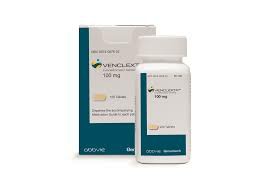
The original drug of Venacla has been launched in the country, andIncluded in Class B medical insurance, the price of 100mg*14 tablets per box may be around 2,000 RMB, while the Turkish version of the original drug sold overseas, 100mg*112 tablets per box, may cost more than 10,000 RMB (the price may fluctuate due to exchange rates). There are also cheaper generic drugs of Venacla sold overseas. Their pharmaceutical ingredients are basically the same as those of the original drugs sold domestically and abroad. For example, the price of 100mg*120 tablets produced by a Bangladesh pharmaceutical factory is more than 4,000 yuan per box (the price may fluctuate due to the exchange rate).
[ 免责声明 ] 本页面内容来自公开渠道(如FDA官网、Drugs官网、原研药厂官网等),仅供持有医疗专业资质的人员用于医学药学研究参考,不构成任何治疗建议或药品推荐。所涉药品可能未在中国大陆获批上市,不适用于中国境内销售和使用。如需治疗,请咨询正规医疗机构。本站不提供药品销售或代购服务。


