
.jpeg)
Ritexitinib detailed instructions
1. Indications and Usage
Ritlecitinib is a kinase inhibitor used to treat severe alopecia areata in adults and adolescents 12 years of age and older.
Restrictions on use: Not recommended for use with otherJAK inhibitors, biological immunomodulators, cyclosporine or other potent immunosuppressants.
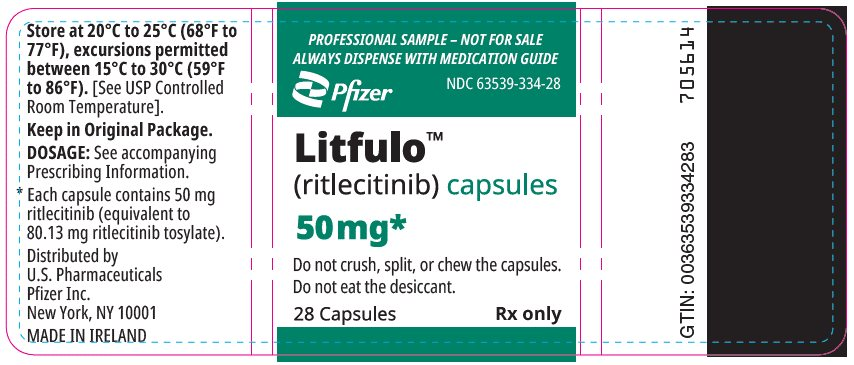
2. Dosage and usage
•See full prescribing information for recommended testing, evaluation, and immunizations before initiating ritixitinib.
•The recommended dose is 50 mg taken orally once daily.
•For dose interruptions for certain adverse reactions, see full prescribing information.
Three. Dosage form and strength
Capsule: 50 mg Ritexitinib
Four. Contraindications
LITFULO is contraindicated in patients with known hypersensitivity toritlecitinib or any of its excipientsLITFULO.
Five. Warnings and Precautions
Increased risk of serious bacterial, fungal, viral, and opportunistic infections leading to hospitalization or death, including tuberculosis. If severe infection occurs, treatment should be interrupted until the infection is controlled. LITFULOShould not be used in patients with active pulmonary tuberculosis. Detect latent tuberculosis before and during treatment; treat latent tuberculosis before use. Monitor all patients for active tuberculosis during treatment, even those with initially negative latent tuberculosis.
Rheumatoid arthritis (RA) patients use another Januskinase inhibitor (JAK) with TNFAll-cause mortality, including sudden cardiovascular death, is higher compared with blockers. Ritexitinibis not approved for use in patients with rheumatoid arthritis.
Malignancy developed in a patient receivingritixitinib. In patients with rheumatoid arthritis, use of anotherJAKinhibitor was associated with a higher incidence of lymphoma and lung cancer compared with use of a tumor necrosis factor blocker.
In patients with rheumatoid arthritis, another JAKinhibitor was associated with a higher incidence of MACE (defined as cardiovascular death, myocardial infarction, and stroke) compared with tumor necrosis factor blockers.
Thrombus formation occurred in patients receivingritixitinib. AnotherJAKinhibitor is associated with an increased incidence of pulmonary embolism and venous and arterial thrombosis compared with tumor necrosis factor blockers.
6. Adverse reactions
The most common adverse reactions (incidence≥1%) are headache, diarrhea, acne, rash, urticaria, folliculitis, pyrexia, atopic dermatitis, dizziness, increased blood creatine phosphokinase, herpes zoster, decreased red blood cell count, and stomatitis.
7. Drug interactions
•CertainCYP3ASubstrates:Additional monitoring and dose adjustments should be considered for CYP3Asubstrates.
•CertainCYP1A2Substrates:Additional monitoring and dose adjustments should be considered for CYP1A2substrates.
•CertainCYP3A inducers:It is not recommended to combine with strong CYP3A inducers.
8. Use among specific groups of people
•Breastfeeding:Breastfeeding is not recommended.
•Severe liver impairment:Not recommended.
If you want to get more high-quality information, you can contact YaDE. YaDE will do its best to learn more about high-quality overseas drugs for you.
xa0
[ 免责声明 ] 本页面内容来自公开渠道(如FDA官网、Drugs官网、原研药厂官网等),仅供持有医疗专业资质的人员用于医学药学研究参考,不构成任何治疗建议或药品推荐。所涉药品可能未在中国大陆获批上市,不适用于中国境内销售和使用。如需治疗,请咨询正规医疗机构。本站不提供药品销售或代购服务。


