
.jpeg)
Enasidenib/azacitidine combination shows early, promising activity in IDH2 mutant AML
Ensidipine
For these elderly patients with IDH2-mutated AML who are not suitable for intensive chemotherapy, combination therapy with ensidipine plus azacitidine is safe, generally well tolerated, and has antileukemic activity. The total effective rate and complete remission rate of the combination therapy group were more than twice that of the azacitidine monotherapy group, and more than twice that of ensidipine monotherapy in patients with newly diagnosed acute myeloid leukemia. This shows that the effect of the combination therapy is greater than the additive effect. In patients with AML, induction myeloablative intensive chemotherapy is the standard initial treatment for those who are candidates for chemotherapy. For those patients who are not suitable for this approach, low-intensity strategies such as low-dose cytarabine, hypomethylating drugs such as venetoclax, glasdegib; and other targeted therapies for patients with FLT3, IDH1, or IDH2 mutations are available options.
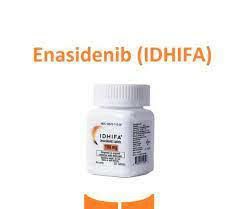
Ensidipine is an oral small molecule IDH2 inhibitor that has been shown to suppress 2-hydroxyglutarate concentrations and inhibit the gain-of-function activity of mutant IDH2 proteins. Based on results from the Phase 1/2 AG221-C-001 trial (NCT01915498), the FDA approved the drug in 2017 for the treatment of patients with relapsed or refractory IDH2-mutated AML. The study included 345 patients with IDH2-mutated hematological malignancies, including 39 patients with newly diagnosed acute myeloid leukemia who were untreated and who were not candidates for intensive chemotherapy. The results showed that the ORR of etacinib monotherapy was 31% (95% CI, 17%-48%), and the median overall survival was 11.3 months (95% CI, 5.7-15.1).
Azacitidine is a hypomethylating drug and DNA methyltransferase inhibitor that has been shown to promote clinical response and improve survival in patients with newly diagnosed AML. Treatment with this drug resulted in modest morphological response rates and a median overall survival (OS) of approximately 10 to 12 months. Compared with azacitidine alone, combined use in vitroEnsidipineand azacitidine have been shown to enhance apoptosis and are associated with greater than additive increases in hemoglobin and reduced numbers of leukemic stem and progenitor cells. Therefore, researchers sought to examine the safety, activity, and recommended dosage of the combination as part of Phase 1b of the study, and to compare it with azacitidine monotherapy as part of Phase 2.
In the phase 2 trial, patients were randomized in a 2:1 ratio to receive ensidipine (100 mg daily) combined with azacitidine (75 mg/m2) or azacitidine (75 mg/m2) alone. The primary endpoint is ORR. Additional data from the Phase 2 portion of the study showed a median follow-up of 14.9 months for patients who received the combination and 13.7 months for those who received azacitidine alone. Additionally, 69% of patients in the combination group and 97% of patients in the azacitidine monotherapy group had discontinued treatment at the time of data cutoff. The CR rate in the combination group was 54% (95% CI, 42%-67%), while the CR rate in the azacitidine group was 12% (95% CI, 3%-28%). In addition, the rate of CR or partial hematologic recovery was 57% in the combination group and 18% in the azacitidine group. The CR rate with incomplete blood count or platelet recovery was 9% in the combination group and 18% in the azacitidine group.
Six percent of patients in each study group achieved partial response, 19% of patients in the combination group had stable disease, and 48% of patients in the azacitidine group had stable disease. The median time to first remission was 1.9 months in the combination group and 3.6 months in the azacitidine group. The time to complete remission was 5.4 months and 4.4 months respectively. The median DOR in the combination arm was 24.1 months (95% CI, 10.0 to not reached [NR]) versus 9.9 months (95% CI, 5.5 to 13.6). The median duration of CR was NR (95% CI, 7.7-NR) and 12.7 months (95% CI, 11.7-NR), respectively.
In terms of safety, the combination of ensidipine and azacitidine was generally well tolerated, with 91% of patients in the combination group experiencing treatment-related adverse events (AEs) and 81% of patients in the azacitidine monotherapy group. The most common grade 1/2 AEs in the combination group were nausea (49%), vomiting (29%), and diarrhea (21%). In addition, the most common grade 3/4 AEs reported in the combination group were neutropenia (37%), thrombocytopenia (37%), and anemia (19%).
[ 免责声明 ] 本页面内容来自公开渠道(如FDA官网、Drugs官网、原研药厂官网等),仅供持有医疗专业资质的人员用于医学药学研究参考,不构成任何治疗建议或药品推荐。所涉药品可能未在中国大陆获批上市,不适用于中国境内销售和使用。如需治疗,请咨询正规医疗机构。本站不提供药品销售或代购服务。


