
.jpeg)
What are the side effects of ramucirumab (ramucirumab)?
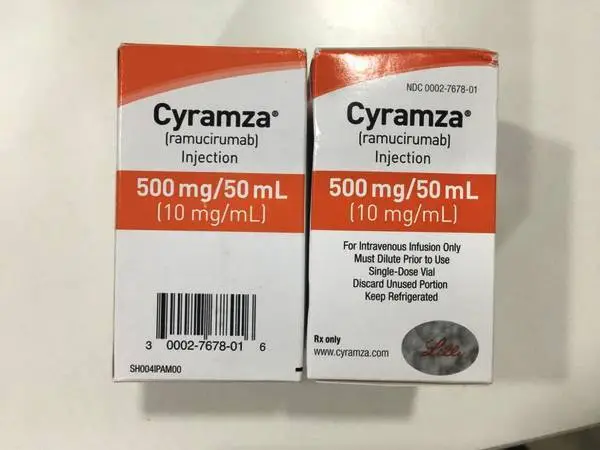
Ramucirumab (ramucirumab) is used to treat stomach cancer, colorectal cancer, or non-small cell lung cancer that has spread to other parts of the body. Ramucirumab(Ramucirumab)Cancer drugs can be used alone or in combination with other drugs. Ramucirumab(Ramucirumab)It is usually used after other treatments have failed.
The most common adverse reactions observed in patients with gastric cancer treated with single agent ramucirumab were hypertension and diarrhea, which occurred 10% and 2% higher than placebo.
The most common adverse reactions observed in patients receiving cilenza plus paclitaxel were fatigue/Asthenia, neutropenia, diarrhea, and epistaxis, which occurred more frequently than in patients treated with placebo plus paclitaxel ≥30% and ≥2%.
The most common adverse reactions observed in patients treated with selenza and erlotinib at rates ≥30% and ≥2% compared with placebo were infection, hypertension, stomatitis, proteinuria, alopecia, and epistaxis. The most common laboratory abnormalities with an incidence difference between the two groups of ≥30% and ≥2% were elevated alanine aminotransferase, elevated aspartate aminotransferase, anemia, thrombocytopenia, and neutropenia.
The most common adverse reactions observed in patients receivingramucirumab in combination with docetaxel were neutropenia, fatigue/asthenia, and stomatitis/ span>Mucosal inflammation, with an incidence greater than ≥30% and ≥2% in patients treated with placebo plus docetaxel.
The most common adverse reactions observed in patients treated with ramucirumab and FOLFIRI compared with placebo FOLFIRI occurred at an incidence rate ≥30%and≥2%, including diarrhea, neutropenia, decreased appetite, epistaxis, and stomatitis. (6.1)
The most common adverse reactions observed in HCCpatients treated with single agent cilenza at rates ≥15% and ≥2% compared with placebo were fatigue, peripheral edema, hypertension, abdominal pain, decreased appetite, proteinuria, nausea, and ascites. The most common laboratory abnormalities were thrombocytopenia, hypoalbuminemia, and hyponatremia, with an incidence rate of ≥30% and a difference of ≥2% between the two groups. If you want to get more high-quality information, you can contact YaDE. YaDE will do its best to learn more about high-quality overseas drugs for you.
xa0
xa0
[ 免责声明 ] 本页面内容来自公开渠道(如FDA官网、Drugs官网、原研药厂官网等),仅供持有医疗专业资质的人员用于医学药学研究参考,不构成任何治疗建议或药品推荐。所涉药品可能未在中国大陆获批上市,不适用于中国境内销售和使用。如需治疗,请咨询正规医疗机构。本站不提供药品销售或代购服务。


