
.jpeg)
Adagrasib approved in Europe for pretreatment of KRAS G12C+ high-grade non-small cell lung cancer
The European Commission has granted Adagrasib Conditional Marketing Authorization for the treatment of adult patients with KRAS G12C-mutated advanced non-small cell lung cancer (NSCLC) whose disease has progressed after at least 1 prior systemic therapy. The decision was supported by data from the Phase 2 registration-enabling cohort of the Phase 1/2 KRYSTAL-1 study (NCT03785249), in which the agent induced an objective response rate (ORR) of 43% in evaluable patients (n=112); including a complete response rate of 0.9% and a partial response rate of 42%. The median duration of response (DOR) was 8.5 months (95% CI, 6.2-13.8), and 58% of patients had an ongoing response for at least 6 months.
Adagarasibprovides an effective and tolerable treatment option for patients with advanced KRAS G12C mutated non-small cell lung cancer. This approval expands the potential treatment options available. Adagorasib’s differentiated characteristics provide an effective treatment option for patients with lung cancer. This approval will help doctors tailor treatments for patients.
This multicenter, single-arm, open-label expansion cohortKRYSTAL-1 study enrolled patients with locally advanced or metastatic KRAS G12C-mutated non-small cell lung cancer who had previously received platinum-based chemotherapy and immune checkpoint inhibitors. To participate in the study, patients must be 18 years or older, have an ECOG performance status of 0 or 1, and have at least 1 measurable lesion according to RECIST v1.1 criteria. Participants took adagrasib orally, 600 mg twice daily. Treatment was continued until disease progression or unacceptable toxicity. ORR and DOR confirmed by blinded independent central review and RECIST v1.1 criteria were the trial's primary efficacy outcome measures.
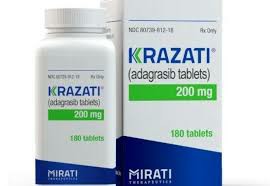
In the efficacy population, the median age of patients was 64 years (range, 25-89 years). Slightly more than half of the patients were female (55%), and the majority were white (83%) and had an ECOG performance status of 1 (83%). Additionally, 97% of patients had adenocarcinoma and 89% had metastatic disease. The median number of previous systemic treatments was 2, with a range of 1 to 7 lines. Of note, 43% of patients had received 1 prior therapy, 35% had 2 prior therapies, 10% had 3 prior therapies, and 12% had 4 or more prior therapies. 98% of patients had previously received platinum-based therapy and immune checkpoint inhibition.
Updated data from the study were releasedduring the 2023 World Congress on Lung Cancer. At a median follow-up of 26.9 months, among evaluable patients (n=132), the median overall survival (OS) with adagrasib was 14.1 months (95% CI, 9.2-18.7); the 1- and 2-year OS rates were 52.8% and 31.3%, respectively. The median progression-free survival (PFS) of evaluable patients (n=128) was 6.9 months (95% CI, 5.4-8.7), and the 1- and 2-year PFS rates were 35.0% and 13.9%, respectively. In addition, the ORR was 43% and the disease control rate was 80%. The median DOR was 12.4 months (95% CI, 7.0-15.1).
Baseline calculated subgroup data were also released. Tumors harborTP53 (n=42), CDK N2a (n=12), STK 11 (n=44) and keap Patients with 1 (n=25) mutations experienced median OS of 18.7 months (95% CI, 11.3-27.0), 13.0 months (95% CI, 1.6-20.8), 9.2 months (95% CI, 5.0-12.7), and 5.7 months (95% CI, 3.6-9.2). In these corresponding groups, the median PFS was 8.7 months (95% CI, 5.0-12.1), 8.4 months (95% CI, 1.2-11.9), 4.2 months (95% CI, 3.9-6.1), and 4.1 months (95% CI, 2.7-5.6). Additionally, among the 26 patients with baseline CNS metastases, the median OS was 14.7 months (95% CI, 7.5-19.3) and the median PFS was 6.9 months (95% CI, 4.1-11.9).
The safety of adagrasib was studied in 116 patients enrolled in KRYSTAL-1.2. 57% of patients experienced severe toxic reactions, and 11% of patients experienced death. Adverse reactions (AEs) leading to discontinuation occurred in 13% of patients. AEs resulted in dose reduction or interruption in 28% and 77% of patients, respectively. The most common adverse events occurring in 20% or more of patients included diarrhea, nausea, fatigue, vomiting, musculoskeletal pain, hepatotoxicity, renal impairment, dyspnea, edema, decreased appetite, cough, pneumonia, dizziness, constipation, abdominal pain, and QTc interval prolongation. Additionally, the most common laboratory abnormalities seen in at least 25% of patients are elevated aspartate aminotransferase, creatinine, alanine aminotransferase, and lipase, and decreased lymphocytes, sodium, hemoglobin, albumin, platelets, magnesium, and potassium.
[ 免责声明 ] 本页面内容来自公开渠道(如FDA官网、Drugs官网、原研药厂官网等),仅供持有医疗专业资质的人员用于医学药学研究参考,不构成任何治疗建议或药品推荐。所涉药品可能未在中国大陆获批上市,不适用于中国境内销售和使用。如需治疗,请咨询正规医疗机构。本站不提供药品销售或代购服务。


