
.jpeg)
Must-read for patients: Overview of basic information in the package insert of Seputinib/Serpatinib
1. Generic names: Selpercatinib , Selpercatinib, Selpercatinib
Product name:Retsevmo, Ruituo, RETEVMO
Other names: Secatinib, Secatinib, LOXO-292
2. Who can take seputinib/serpatinib? Indications?
1. RET fusion-positive non-small cell lung cancer (NSCLC): Selpercatinib is indicated for the treatment of adult patients with locally advanced or metastatic non-small cell lung cancer and has a rearranged during transfection (RET) gene fusion detected by an FDA-approved test.
2. RETmutated medullary thyroid carcinoma (MTC):Seputinib is indicated for the treatment of adult and pediatric patients 12 years of age and older with RET-mutated advanced or metastatic medullary thyroid cancer, as detected by an FDA-approved test, who require systemic therapy.
3. RET fusion-positive thyroid cancer (TC): Seputinib is indicated for the treatment of RET gene fusion in adult and pediatric patients 12 years of age and older with advanced or metastatic thyroid cancer who require systemic therapy and are refractory to radioactive iodine (if radioactive iodine is appropriate), as detected by an FDA-approved test.
4. OthersRET fusion-positive solid tumors: Seputinib is indicated for useRET gene fusion in adult patients with locally advanced or metastatic solid tumors who have progressed on or after prior systemic therapy or who have no satisfactory alternative treatment options.
3. What are the side effects of serputinib/serpatinib?
In clinical studies of seputinib, the most common side effects were loss of appetite, headache, dizziness,QT interval prolongation (changes in the electrical activity of the heart), high blood pressure, abdominal pain, diarrhea, nausea (feeling unwell), vomiting, constipation, oral Dryness, rash, fever, fatigue, edema (swelling caused by fluid accumulation), bleeding, and blood tests showing changes in liver enzymes (indicating stress on the liver), decreased platelet and white blood cell counts (components that help blood clot), decreased magnesium, and increased creatinine (indicating kidney problems). The most common serious side effects are abdominal pain, hypersensitivity (anaphylaxis), diarrhea, and changes in liver enzymes on blood tests.
4. How should you take seputinib/serpatinib?
1. Before treatment: Based on the presence of RET gene fusion (NSCLC, TC or other solid tumors) or specific RET gene mutation (MTC) in tumor specimens, select patients to receive seputinib treatment.
2. Medication instructions: Seputinib can be taken with or without food, unless taken with a proton pump inhibitor (PPI). If vomiting occurs after a dose, do not take another dose and continue until the next scheduled dose.
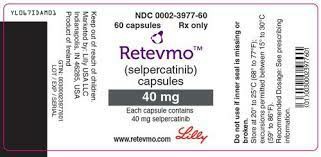
3. Recommended dosage: The dosage of seputinib is related to the patient's weight; for patients less than 50 kg, use 120 mg, and for patients 50 kg or more, use 160 mg, taken orally twice a day (approximately every 12 hours) until disease progression or unacceptable toxicity occurs.
5. How to store seputinib/serpatinib?
Seputinib is available as a capsule formulation that can be stored20°C to 25°C (68°F to 77°F); the temperature is allowed to fluctuate between 15°C and 30°C (59°F to 86°F)
6. How does serputinib/serpatinib work?
Seputinib is a kinase inhibitor. Seputinib inhibits wild-type RET and multiple mutated RET isoforms as well as VEGFR1 and VEGFR3 with IC50 values u200bu200branging from 0.92nM to 67.8nM. In other enzyme assays, seputinib also inhibited FGFR 1, 2, and 3 at higher concentrations that are still clinically achievable. In cell assays, seputinib inhibited RET at concentrations approximately 60-fold lower than FGFR1 and 2 and approximately 8-fold lower than VEGFR3.
Certain point mutations in RET or chromosomal rearrangements involving in-frame fusion of RET with various partners can lead to constitutively active chimeric RET fusion proteins that can act as oncogenic drivers by promoting cell proliferation in tumor cell lines. In in vitro and in vivo tumor models, seputinib showed antitumor activity in cells harboring constitutively activated RET proteins caused by gene fusions and mutations, including CCDC6-RET, KIF5B-RET, RET V804M, and RET M918T. In addition, septinib showed antitumor activity in mice with intracerebral implantation of patient-derived RET fusion-positive tumors.
7. What will happen if you overdose on seputinib/serpatinib?
Information on the toxicity of seputinib is unknown. Patients who overdose are at increased risk for serious adverse reactions, such as hepatotoxicity, hypertension, QT prolongation, and bleeding. Symptomatic support measures are recommended.
8. Who cannot use serputinib/serpatinib?
Seputinib may impair the fertility of women and men of reproductive potential, therefore it is recommended that women of childbearing potential and male patients use effective contraception during treatment and for 1 week after the last dose; and lactating women should not breastfeed for 1 week.
[ 免责声明 ] 本页面内容来自公开渠道(如FDA官网、Drugs官网、原研药厂官网等),仅供持有医疗专业资质的人员用于医学药学研究参考,不构成任何治疗建议或药品推荐。所涉药品可能未在中国大陆获批上市,不适用于中国境内销售和使用。如需治疗,请咨询正规医疗机构。本站不提供药品销售或代购服务。


