
.jpeg)
How effective is platinib in the treatment of pulmonary leukocyte carcinoma?
Pralsetinib is a targeted drug used to treat non-small cell lung cancer . It mainly targets mutations in the RET gene and is widely used in patients with RET fusion genes. Lung cell carcinoma belongs to an important classification of non-small cell lung cancer. Pulmonary lin cell carcinoma is a common malignant lung tumor, which includes some specific subtypes. One such subtype is lung cell carcinoma harboring the RET fusion gene. The RET fusion gene is caused by the fusion of the RET gene with other genes. This fusion causes tumor cells to produce abnormal signaling and promotes the growth and spread of tumors.
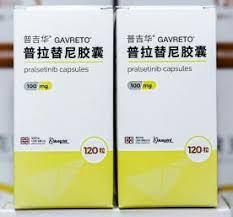
A clinical trial in advanced or metastatic RET mutation-positive non-small cell lung cancer showed positive results with platinib in the treatment. Among previously untreated patients with RET fusion-positive NSCLC in the ITT population, the overall response rate (ORR) was 72%, and the median time to first response was 1.8 months. 5% of patients had a response (CR), 67% had a partial response (PR), 19% had stable disease, 7% had disease progression, but 3% of patients could not be evaluated. The disease control rate (DCR) was 91% and the clinical benefit rate (CBR) was 80%. The median duration of response (DOR) was not reached, and the median progression-free survival (PFS) was 13.0 months and 16.5 months, respectively.
In this trial, patients received platinib, which showed tumor shrinkage in more than half of the patients. In addition, platinib also extended patient survival and its efficacy was durable. In addition to its specific efficacy, platinib is also well tolerated. In clinical trials, the main side effects of Platinib were mild discomfort such as fatigue, nausea, and vomiting, which could be effectively controlled in most patients. In addition, serious adverse reactions are rare during treatment with platinib.
However, like other medications, platinib has some potential risks and side effects. Therefore, before using platinib to treat pulmonary leukocyte carcinoma, doctors will conduct a comprehensive assessment based on the patient's condition and physical condition, and fully communicate with the patient to ensure that the most appropriate treatment plan is formulated. In addition, the use of platinib also needs to follow the guidance of your doctor, including the correct dosage and administration time. Patients should undergo regular examinations and evaluations during treatment to monitor the effectiveness of treatment and possible side effects.
In general, platinib, as a targeted drug, shows good results in the treatment of pulmonary leukocyte carcinoma. It inhibits abnormal signaling by targeting mutations in the RET fusion gene, thereby inhibiting the growth and spread of tumors. However, the specific treatment plan needs to be determined according to the patient's condition, and treatment should be carried out under the guidance of a doctor.
[ 免责声明 ] 本页面内容来自公开渠道(如FDA官网、Drugs官网、原研药厂官网等),仅供持有医疗专业资质的人员用于医学药学研究参考,不构成任何治疗建议或药品推荐。所涉药品可能未在中国大陆获批上市,不适用于中国境内销售和使用。如需治疗,请咨询正规医疗机构。本站不提供药品销售或代购服务。


