
.jpeg)
What are the efficacy and effects of dabrafenib?
Dabrafenib is a drug widely used to treat certain types of cancer. Its main function is to prevent the growth and spread of cancer cells by inhibiting the activity of BRAF (B lymphoma kinase) kinase. Before understanding the efficacy and effects of dabrafenib, let's take a closer look at the related cancer types and BRAF mutations.
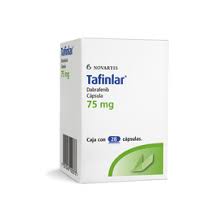
1.BRAFMutation and Cancer:BRAF is a kinase involved in signaling pathways for cell growth and differentiation. When the BRAF gene is mutated, it will lead to abnormal activation of kinases, promoting abnormal cell proliferation and tumor formation. Among them, BRAF V600 mutation is the most common form of mutation, especially associated with malignant melanoma and avesicular thyroid cancer.
2.Dabrafenib’s mechanism of action: Dabrafenib is a BRAF inhibitor that specifically targets BRAF V600 mutated cancers. It blocks downstream events in the signaling pathway by binding to BRAF kinase and inhibiting its activity, thereby reducing the growth and differentiation of cancer cells and ultimately inducing apoptosis.
3.Treatment of malignant melanoma: Malignant melanoma is a highly aggressive skin cancer, and BRAF mutations play a key role in its occurrence and development. Dabrafenib is approved for the treatment of patients with BRAF V600 mutation-positive advanced or metastatic malignant melanoma. Its use significantly extends patient survival and time to disease progression.
4.Treatment of ablative thyroid cancer: Ablative thyroid cancer is a rare but aggressive type of thyroid cancer, and about50%of patients have the BRAF V600E mutation. Dabrafenib is also approved for the treatment of BRAF V600E mutated avesicular thyroid cancer as a first-line treatment option.
5.Combined treatment with trametinib: Trametinib is aMEKinhibitor. Combination with dabrafenib can produce a synergistic effect and improve the therapeutic effect. Trametinib blocks some feedback mechanisms of signaling pathways that may occur during dabrafenib monotherapy, thereby enhancing the inhibitory effect on cancer cells.
6.Adverse reactions and safety: Although the combination treatment of dabrafenib and trametinib has shown significant therapeutic effects in patients with malignant melanoma and avesicular thyroid cancer, they may also cause some adverse reactions, including but not limited to skin problems (such as rash, dryness, pigmentation), fever, joint pain, fatigue, etc. Therefore, when using these drugs, doctors need to fully evaluate the patient's health status, conduct close monitoring, and take appropriate measures to manage possible adverse reactions.
In general, dabrafenib is a targeted therapy that inhibits the growth and spread of cancer cells by interfering with tumor cell signaling pathways, providing an important treatment option for patients with malignant melanoma and ablative thyroid cancer. Combination with trametinib may further improve therapeutic efficacy, but patients need to be closely monitored for safety and adverse effects.
xa0
[ 免责声明 ] 本页面内容来自公开渠道(如FDA官网、Drugs官网、原研药厂官网等),仅供持有医疗专业资质的人员用于医学药学研究参考,不构成任何治疗建议或药品推荐。所涉药品可能未在中国大陆获批上市,不适用于中国境内销售和使用。如需治疗,请咨询正规医疗机构。本站不提供药品销售或代购服务。


