
.jpeg)
What are the conditions for giving dabrafenib and trametinib?
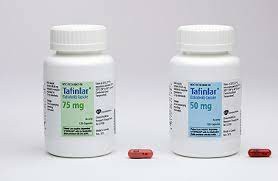
Dabrafenib and trametinib are targeted drugs for specific types of cancer, often used as combination treatments. Because of the high price of these drugs and the financial impact of cancer treatment on patients, many pharmaceutical companies and medical institutions offer drug grant programs to help qualifying patients obtain these drugs. The conditions for drug donation are usually based on the patient's personal situation and medical needs. The following conditions may be considered under general circumstances:
1.Financial status: Free drug programs are usually targeted at patients who have financial difficulties and cannot afford high medical expenses. Patients are usually asked to provide financial information, such as proof of income, property, etc., to assess their financial situation.
2.Medical insurance coverage: Some free drug plans may require patients to prove that their medical insurance cannot cover the cost of dabrafenib and trametinib, or require patients to use the balance of their medical insurance to pay part of the cost before providing free drugs.
3.Cancer diagnosis: Patients are typically required to provide a cancer diagnosis from their physician confirming that they indeed have the type of cancer for which the indication is indicated, such as malignant melanoma or avesicular thyroid cancer, and that specific genetic mutations are present for dabrafenib and trametinib.
4.Reasonability of treatment: Drug donation programs usually require the patient's doctor to provide a treatment plan and confirm that the treatment of dabrafenib and trametinib is reasonable and necessary for the patient.
5.Clinical trial qualifications: Some pharmaceutical companies may require patients to meet specific clinical trial qualifications in order to receive free drugs. This typically requires patients to meet a series of clinical trial inclusion criteria and participate in the clinical trial process.
6.Accessibility of drug supply: Drug donation programs may consider the availability and restrictions of drug supply, including drug supply in the patient's region, the hospital's drug procurement policy, etc.
7.Patient willingness to participate: Finally, drug donation programs may require patients to sign an informed consent form to confirm that they understand and agree to participate in the program and accept relevant monitoring and follow-up.
It should be noted that the specific conditions of the drug gift program may vary depending on the pharmaceutical company, medical institution, or individual patient circumstances. Therefore, patients should work with their physician or healthcare team to learn more about the specific grant program conditions that apply to them and follow the appropriate application process.
[ 免责声明 ] 本页面内容来自公开渠道(如FDA官网、Drugs官网、原研药厂官网等),仅供持有医疗专业资质的人员用于医学药学研究参考,不构成任何治疗建议或药品推荐。所涉药品可能未在中国大陆获批上市,不适用于中国境内销售和使用。如需治疗,请咨询正规医疗机构。本站不提供药品销售或代购服务。


