
.jpeg)
Dosage of trastuzumab
Before starting treatment with Fam-trastuzumab deruxtecan-nxki, patients must undergo relevant genetic mutation and tumor sample testing to ensure the suitability and effectiveness of the drug. Of particular note, datrastuzumab should not be used as a substitute for trastuzumab or ado-trastuzumab emtansine.
Because trastuzumab is an injectable preparation, patients may experience related symptoms during the infusion process. In this case, the infusion rate should be slowed down or interrupted immediately to ensure patient safety. In addition, trastuzumab must be administered intravenously through an infusion set made of polyolefin or polybutadiene to ensure the drug's stability and effectiveness. During the first infusion, the infusion time should be more than 90 minutes to observe the patient's reaction. If the patient tolerates the previous infusion well, dosing can be completed within 30 minutes.
Trastuzumab may cause moderate emetogenic reactions in patients, including delayed nausea and/or vomiting. Therefore, before using trastuzumab, patients should follow local institutional guidelines for the prevention of chemotherapy-induced nausea and vomiting and take prophylactic antiemetic medications to reduce these uncomfortable symptoms.
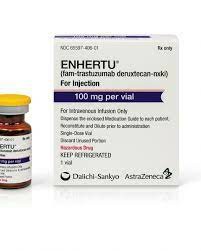
For patients with breast cancer (MBC) and non-small cell lung cancer (NSCLC), the recommended dose of trastuzumab is 5.4 mg/kg as an intravenous infusion every 3 weeks (21-day cycle). For patients with gastric cancer (MGC), the recommended dose is 6.4mg/kg, also administered intravenously every 3 weeks. During treatment, if the disease progresses or unacceptable toxicity occurs, trastuzumab should be discontinued promptly.
If a patient experiences adverse reactions while taking detrastuzumab, they may need to temporarily interrupt treatment, reduce the dose, or stop taking detrastuzumab entirely. After a dose reduction, it is not recommended to increase the dose of trastuzumab again. If a scheduled dose is delayed or missed, replenishment should be done as soon as possible rather than waiting for the next scheduled cycle. When adjusting the dosing schedule, maintain a 3-week interval between doses and infuse at the dose and rate that the patient tolerated during the most recent infusion. If a patient experiences a serious infusion reaction, trastuzumab should be permanently discontinued to ensure patient safety.
For patients requiring dose reduction, the initial dose of trastuzumab in patients with breast cancer and non-small cell lung cancer can be reduced to 4.4mg/kg, the second dose was reduced to 3.2mg/kg. If further dose reduction is necessary, discontinuation of treatment should be considered. For patients with gastric cancer, the first dose can be reduced to 5.4 mg/kg and the second dose to 4.4 mg/kg. Likewise, if further dose reduction is necessary, discontinuation of treatment should also be considered. These adjustments are designed to ensure that patients receive optimal treatment outcomes while minimizing the risk of adverse effects when taking trastuzumab.
[ 免责声明 ] 本页面内容来自公开渠道(如FDA官网、Drugs官网、原研药厂官网等),仅供持有医疗专业资质的人员用于医学药学研究参考,不构成任何治疗建议或药品推荐。所涉药品可能未在中国大陆获批上市,不适用于中国境内销售和使用。如需治疗,请咨询正规医疗机构。本站不提供药品销售或代购服务。


