
.jpeg)
Detailed explanation of Eltrombopag/Eltrombopag treatment instructions
1. Treatment areas
Eltrombopag (Eltrombopag), as a platelet production stimulator, plays a key role in the treatment of various blood diseases. It mainly applies to the following situations:
1. Immune thrombocytopenia (ITP): For patients 1 year and older, when traditional corticosteroids, immune globulin, or splenectomy are ineffective, eltrombopag can be used as a treatment option. Especially for those patients with low platelet counts who are at risk for bleeding.
2. Hepatitis C-related thrombocytopenia: Eltrombopag can help patients with chronic hepatitis C increase platelet levels, thereby supporting the initiation and maintenance of interferon therapy.
3. Severe aplastic anemia (AA): Eltrombopag can be combined with standard immunosuppressive therapy (IST) as the first-line treatment for patients with severe AA aged 2 years and above. It is also suitable for patients who do not respond well to immunosuppressive therapy.
2. Use restrictions
Although eltrombopag is widely used in a variety of conditions, it may not work in all conditions. In particular, it should not be used to treat patients with myelodysplastic syndrome (MDS). At the same time, the safety and effectiveness of eltrombopag in combination with interferon-free antiviral drugs have not been established for the treatment of chronic hepatitis C.
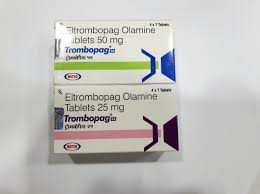
3. Dosage and usage
1. Dosage for ITP patients: Children aged 1 to 5 years old: 25 mg daily; patients 6 years old and above: 50 mg daily.
Dosage adjustment may be necessary in patients with impaired hepatic function or in patients of East Asian/Southeast Asian ancestry. During treatment, the dose may need to be adjusted based on platelet count to ensure that platelet levels are maintained above 50×109/L, thereby reducing the risk of bleeding.
2. Dosage of hepatitis C-related ITP: Initial dose: 25 mg daily; thereafter increase by 25 mg every 2 weeks until the platelet level required for antiviral treatment is reached. During treatment, monitor platelet counts weekly.
3. Dosage of heavy AA:
(1) First-line treatment: 2.5 mg/kg for children 2-5 years old; 75 mg 6-11 years old; 150 mg 12 years old and older for 6 months. Doses may need to be reduced in patients with impaired hepatic function or those of East Asian/Southeast Asian ancestry.
(2) Refractory AA: Initial dose is 50 mg daily, then adjusted based on platelet count.
4. Medication precautions
Eltrombopag should be taken with low-calcium foods and avoid taking with calcium-rich foods, antacids, or polyvalent cation supplements. In addition, this medicine should not be taken with meals.
5. Potential side effects
The most common side effects of eltrombopag include nausea, diarrhea, and abnormalities in certain liver enzymes. Serious side effects may include bleeding, liver problems, and thromboembolism. In children, common side effects include nose and throat infections and coughing. For patients with severe AA, side effects such as headache and joint pain may also occur.
6. Storage requirements
Eltrombopag should be stored at room temperature (20°C to 25°C) and avoid excessive heat or cold. At the same time, the original bottle packaging should be maintained.
7. Drug action mechanism
Eltrombopag initiates a signaling cascade by interacting with the transmembrane region of the human bodyTPO receptor (also known as cMpl), thereby stimulating the proliferation and differentiation of megakaryocytes, ultimately leading to an increase in platelet production. This mechanism makes eltrombopag an effective drug for the treatment of various blood diseases.
[ 免责声明 ] 本页面内容来自公开渠道(如FDA官网、Drugs官网、原研药厂官网等),仅供持有医疗专业资质的人员用于医学药学研究参考,不构成任何治疗建议或药品推荐。所涉药品可能未在中国大陆获批上市,不适用于中国境内销售和使用。如需治疗,请咨询正规医疗机构。本站不提供药品销售或代购服务。


