
.jpeg)
Selinisol/ruxolitinib combination is tolerated and exhibits durable splenic symptomatic response in JAK inhibitor–primary myelofibrosis
The combination of the oral XPO1 inhibitor selinexor (Selinexor) with ruxolitinib (ruxolitinib) was associated with a tolerable and manageable adverse effect (AE) profile and elicited a clinical efficacy signal in JAK inhibitor-naïve patients with myelofibrosis, according to 2023 data from the Phase 1/3 XPORT-MF-034 trial (NCT04562389). In an evaluation of 14 patients, the median time to resolution of spleen and symptoms in the study was 12.1 weeks. During a median follow-up period of 32 weeks, these patients had a 100% probability of achieving a splenic volume response (SVR). At a median follow-up of 51 weeks, 100% of these patients were expected to maintain a total symptom score (TSS) response.
The researchers also evaluated selinisogaruxolitinib for treatment with an SVR of 35% or greater (SVR 35) and an improvement in TSS of 50% or greater (ts s50). SVR35 at week 24 was 92% in the efficacy evaluable population and 79% in the intention-to-treat population; TSS50 was 78% and 58%, respectively. Encouraging signs of durable SVR and symptom improvement were observed with selinesol 60 mg weekly plus ruxolitinib.
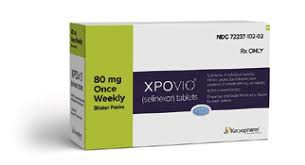
Myelofibrosis is an advanced myeloproliferative neoplasm for which despite current treatment options, various unmet needs remain due toJAK/STAT pathway hyperactivity and activating mutations. Treatment options such as JAK inhibitors including ruxolitinib may have limitations, such as low response rates and non-durable responses, leading to worsening of cytopenia cases. Based on these unmet needs, further research into aggressive upfront treatments may enhance disease remission. Selinisol is highly selective because it targets XPO1, which targets both JAK/STAT and non-JAK/STAT pathways in myelofibrosis.
Based on preliminary evidence and studies in mouse models, the researchers show that selinesol reduces phosphorylation and other key downstream proteins and increasesp53-driven cell death, leading to cell cycle arrest. These results led to studies of combination therapy in patients with JAK-naïve myelofibrosis. Patients were eligible if they had a spleen volume ≥450 cm3 by magnetic resonance imaging or computed tomography; a Dynamic International Prognostic Scoring System (DIPSS) score of intermediate-1 and symptomatic, and intermediate-2 or high risk; no more than 2 ECOG performance figures; and a platelet count of 100×10^9/L or higher.
The study started fromThe Phase 1a dose-escalation phase began in which patients received selinesol 40 mg (n=3) or 60 mg (n=3) once weekly and ruxolitinib 15 or 20 mg twice daily. This resulted in the phase 1b dose expansion portion of the study of selinexol at 40 or 60 mg once weekly versus ruxolitinib (n=18). This has led to an ongoing randomized Phase 1/3 trial of 306 patients who will be randomized in a 2:1 fashion to receive oral selinesol 60 mg once weekly or placebo ruxolitinib. Primary endpoints include establishment of the maximum tolerated dose or recommended phase 3 dose and safety. Secondary endpoints include SVR35, TSS50, anemia response, and AEs.
Regarding baseline characteristics, the median age was64.5 years, 35.7% of patients were female, and the median patient weight was 77.5kg. In addition, 92.9% of patients were transfusion-independent and 7.1% were transfusion-dependent; 50% of patients had primary myelofibrosis; 28.6% had essential thrombocythemia myelofibrosis; and 21.4% had post-polycythemia vera myelofibrosis. Regarding mutation status, 78.6%, 14.3%, 7.1% and 35.7% of patients had JAK2, CALR, MPL and high molecular risk mutations, respectively. A total of 21.4% of patients had a DIPS score of moderate-1, while 57.1% and 21.4% had a DIPS score of moderate-2 or high risk.
Regarding baseline hemoglobin,57.1% of patients had baseline hemoglobin below 10 g/dL, and 85.7% had platelet counts (10^9/L) of 150 or higher. The median baseline spleen volume of patients was 1961.6 cm3, and the mean baseline TSS was 21.6. Spleen volume and symptom scores continued to decrease in patients who received 5 mg or less of ruxolitinib twice daily in combination with 60 mg of selinesol for at least 5 of the first 6 cycles.
The researchers also examined changes in cytokines and showed that among evaluable patients, the early reduction in pro-inflammatory cytokines observed at week 4 after treatment with selinesol plus ruxolitinib was associated with SVR at week 24. Variant allele frequencies were also measured using two doses of selinexol plus ruxolitinib at week 24, indicating that a reduction in allelic burden was observed in 13 evaluable patients, regardless of driver gene mutation.
A decrease in variant allele frequency of 20% or more was observed in 5 patients, 3 of whom had variant allele frequencies of 50% or more at baseline and were at high molecular risk. Notably, 13 of 24 patients had variant allele frequency values u200bu200bat baseline, and 11 of these 13 patients achieved SVR35 at any time.
Considering safety, any grade of treatment-emergent adverse reaction (TEAEs) included nausea (78.6%), anemia (64.3%), thrombocytopenia (64.3%), fatigue (57.1%), constipation (50.0%), vomiting (50.0%), dyspnea (35.7%), headache (nausea was transient, median Duration was 2 cycles. 64% of patients received 1 dose of antiemetic prophylaxis. In the subgroup who received 1 dose of antiemetic prophylaxis, 67% experienced nausea (grade 1 only) compared with 100% of patients who did not receive antiemetic prophylaxis.
Reported grade 3 or higher TEAEs were anemia (42.9%), thrombocytopenia (28.6%), back pain (14.3%), neutropenia (7.1%), atrial fibrillation (7.1%), and leukopenia (7.1%). In addition, treatment-related AEs leading to treatment discontinuation included 1 patient with Grade 3 thrombocytopenia and 1 patient with Grade 3 peripheral neuropathy.
[ 免责声明 ] 本页面内容来自公开渠道(如FDA官网、Drugs官网、原研药厂官网等),仅供持有医疗专业资质的人员用于医学药学研究参考,不构成任何治疗建议或药品推荐。所涉药品可能未在中国大陆获批上市,不适用于中国境内销售和使用。如需治疗,请咨询正规医疗机构。本站不提供药品销售或代购服务。


