
.jpeg)
The potential and effectiveness of selinesol in the treatment of myeloid leukemia
Acute myeloid leukemia (AML) is the most common type of leukemia in adults. Although current treatment strategies continue to improve, the prognosis is still unsatisfactory for elderly patients and those with frail health. In this context, Selinexor, as an innovative oral small molecule Exportin-1 inhibitor, brings new hope for the treatment of AML.
Because manyAML patients already have comorbidities or poor physical performance at the time of diagnosis, they are unable to receive conventional high-intensity chemotherapy. Although the combination therapy of venetoclax and azacitidine can improve clinical response rate in some cases, the effect is not significant in Chinese patients, low-risk or TP53 mutation patient groups. Therefore, providing effective treatment for elderly and incapacitated AML patients remains a major challenge.
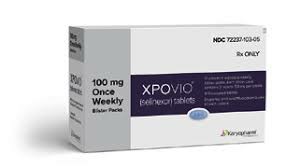
Selinisol works by blocking the action of a protein called Export in1 (XPO1). In many cancer cells, the XPO1 protein inhibits the action of certain proteins that help stop cancer growth. By blocking XPO1, selinesol enhances the effects of these proteins, causing cancer cells to die and thereby slow the progression of the disease. Preclinical studies of selinesol have revealed its unique anti-cancer properties as a selective nuclear export inhibitor, showing significant potential in AML in particular. Selinisol has demonstrated encouraging efficacy and good tolerability in clinical trials, both as a single agent and in combination therapy.
Recent studies have also explored triple therapy with selinesol, venetoclax, and azacitidine (SAV regimen). This combination treatment regimen has shown promising results in real-world settings, particularly for those AML patients with severe comorbidities. These beneficial results further confirm the potential of selinesol in the treatment of AML.
In a study involving multiple patients, most subjects completed at least1 cycle of treatment. Among them, some patients completed up to 4 cycles of treatment, and all but one patient whose disease progressed are still receiving treatment. As the treatment time is extended, the patient's degree of relief is expected to further improve. Among patients in different risk groups, including intermediate-risk and poor-risk groups as defined by ELN 2022, selinesol treatment regimen demonstrated higher complete response (CR)/incomplete count recovery (CRi) rate and overall response rate (ORR). Compared with data from the VIALE-A study, the CR/CRi rate in adverse-risk patients in this study was higher, demonstrating the superiority of the selinesol treatment regimen.
Taken together, clinical evidence supports selinesol as an effective treatment for acute myeloid leukemia. Selinisol has demonstrated encouraging therapeutic effects whether as monotherapy or in combination with other drugs such as venetoclax and azacitidine. With the deepening of research and the accumulation of clinical data, there is reason to believe that selinesol will play an increasingly important role in the treatment of myeloid leukemia.
[ 免责声明 ] 本页面内容来自公开渠道(如FDA官网、Drugs官网、原研药厂官网等),仅供持有医疗专业资质的人员用于医学药学研究参考,不构成任何治疗建议或药品推荐。所涉药品可能未在中国大陆获批上市,不适用于中国境内销售和使用。如需治疗,请咨询正规医疗机构。本站不提供药品销售或代购服务。


