
.jpeg)
FDA approves priority review for adagrasib/cetuximab combination to treat KRAS G12C mutant colorectal cancer
The U.S. Food and Drug Administration (FDA) has accepted for priority review a supplemental New Drug Application (sNDA) seeking approval of adagrasib in combination with cetuximab for patients with previously treated locally advanced or metastatic KRAS G12C-mutant colorectal cancer (CRC).
The NDA is supported by data from the multi-short-termPhase 1b/2 KRYSTAL-1 study (NCT03785249), in which adaglicib alone or in combination with other anticancer agents produced clinically meaningful activity and tolerable toxicity in patients with KRAS G12C-mutant advanced solid tumors. In the CRC cohort of the trial, treatment with adaglicib alone or in combination with cetuximab produced encouraging responses in this patient population.
At a median follow-up of 17.5 months, a total of 28 patients had an objective response rate (ORR) of 46% (95% CI, 28%-66%). All responses were partial; the remaining 54% had stable disease. The median duration of response was 7.6 months (95% confidence interval 5.7 - not estimable). Notably, the FDA has designated a Prescription Drug User Fee Act (PDUFA) target date for the combination therapy as June 21, 2024.
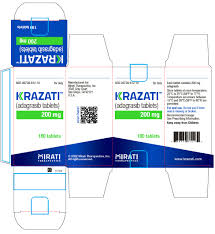
Adaglicib is a potent, highly selective oral KRAS G12C small molecule inhibitor optimized for sustained targeted inhibition. The KRAS G12C mutation is a carcinogen and is present in approximately 14% of patients with non-small cell lung cancer (NSCLC), 3% to 4% of patients with colorectal cancer, and 1% to 2% of patients with other cancers. In December 2022, based on the results of the KRYSTAL-1.1 study, adaglicib received accelerated approval from the FDA for the treatment of patients with locally advanced or metastatic non-small cell lung cancer with KRAS G12C mutations.
KRYSTAL-1’s findings also support the FDA’s Breakthrough Therapy Designation in December 2022 for the combination therapy in patients with KRAS G12C mutated advanced colorectal cancer. This nonrandomized, open-label trial included adult patients 18 years of age and older with histologically confirmed advanced, unresectable, or metastatic KRAS G12C-mutated colorectal cancer. In addition, patients must have no other available treatment options; an ECOG performance score of 0 or 1; and measurable disease. Exclusion criteria included active central nervous system metastases, cancerous meningitis, and systemic or radiation therapy within 2 weeks before starting adaglicib treatment.
In the pilotPhase 1b cohort, patients received a combination of oral adaglicib (600 mg twice daily) and intravenous cetuximab. The initial loading dose of cetuximab was 400 mg/m2 body surface area, followed by 250 mg/m2 at 500 mg/m2 once weekly or every two weeks. The primary endpoint of the Phase 1b combination cohort was safety; secondary endpoints included tumor response outcomes. The median time to response with the combination was 1.4 months (range, 1.2-19.2), and median progression-free survival was 6.9 months (95% CI, 5.4-8.1) among all patients in the CRC cohort (n=32). Of note, the median overall survival was 13.4 months (95% CI, 9.5-20.1).
Regarding safety, treatment-related adverse reactions (TRAEs) of any grade occurred in 100% of patients. Adverse events occurring in at least 20% of patients included nausea (62%), diarrhea (56%), vomiting (53%), acneiform dermatitis (47%), fatigue (47%), dry skin (41%), headache (31%), dizziness (25%), maculopapular rash (25%), and stomatitis (22%). Eleven patients taking adaglicib (31%) or cetuximab (3%) had a decrease in TRAEs. Five patients discontinued cetuximab treatment due to infusion-related reactions, discomfort, and vascular flushing.
[ 免责声明 ] 本页面内容来自公开渠道(如FDA官网、Drugs官网、原研药厂官网等),仅供持有医疗专业资质的人员用于医学药学研究参考,不构成任何治疗建议或药品推荐。所涉药品可能未在中国大陆获批上市,不适用于中国境内销售和使用。如需治疗,请咨询正规医疗机构。本站不提供药品销售或代购服务。


