
.jpeg)
How effective is adagrasib in treating lung cancer?
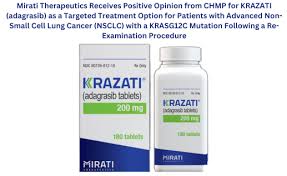
Adagrasib is an oral drug targeting the KRAS G12C mutation and is considered a new treatment for advanced non-small cell lung cancer (NSCLC) and other tumors. As clinical trials proceed, people gradually have a clearer understanding of its efficacy.
1. Clinical Trial Overview
In clinical trials evaluating the efficacy of adagrasiib, researchers focused on its performance in patients withKRAS G12Cmutations. Here are some important clinical trials:
CodeBreaK 100: This is a multicenter, open-label, Phase I/II clinical trial in lung, colorectal and other advanced solid tumors. The trial evaluated the efficacy and safety of adagrasiib.
CodeBreaK 101: This is an open-label, multicenter, Phase I/II clinical trial evaluating the safety and efficacy of adagrasib in patients with KRAS G12C-positive advanced NSCLC.
2. Effectiveness data analysis
2.1 Overall response rate of adagrasib (ORR)
According to results from the CodeBreaK 101 trial, adagrasib showed a relatively high overall response rate (ORR), which is the proportion of patients whose tumors shrink. In some studies, the ORR can be as high as 30% or more, which is a significant improvement for KRAS G12C mutated tumors.
2.2 Continuous reaction time (DOR)
Another important indicator of adagrasib is the duration of response (DOR), which is how long the tumor continues to respond to treatment. Clinical trial data suggests that some patients have longer-lasting responses, possibly as long as months, meaning adagrasib can be an effective treatment option for some patients.
2.3 Lifetime data
While survival data are still being actively collected and analyzed, preliminary results show that adagrasib can extend survival in some patients. This is a major breakthrough for patients with advanced NSCLC, especially when treatment options for KRAS -mutant tumors have been limited in the past.
3. Security Assessment
In clinical trials, the safety of adagrasib has also received close attention. Although some patients may experience mild adverse reactions, such as nausea, diarrhea, and fatigue, overall the safety profile of adagrasib is favorable and the incidence of adverse reactions is low.
4. Research limitations and future prospects
Although adagrasib has shown promise in treating KRAS G12CmutatedNSCLC, there are some limitations to clinical trials. For example, some trials are smaller and still require longer follow-up to assess their long-term efficacy and safety. In addition, further studies on the combination of adagrasiib with other treatment options are needed to seek more effective treatment strategies.
In summary, adagrasib, as a new KRAS G12C inhibitor, provides a new treatment option for patients with advanced NSCLC. Although there are still some challenges and unknowns, the efficacy and safety data of adagrasib show its potential in the treatment of lung cancer and bring hope to patients. In the future, as more research is carried out and data is accumulated, people's understanding of adagrasib will be further deepened, providing better treatment options for lung cancer patients.
[ 免责声明 ] 本页面内容来自公开渠道(如FDA官网、Drugs官网、原研药厂官网等),仅供持有医疗专业资质的人员用于医学药学研究参考,不构成任何治疗建议或药品推荐。所涉药品可能未在中国大陆获批上市,不适用于中国境内销售和使用。如需治疗,请咨询正规医疗机构。本站不提供药品销售或代购服务。


