
.jpeg)
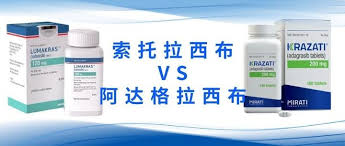
Differences and comparisons between Adagrasib and Sotorasib
Adagrasib () and sotorasib (Sotorasib) are both targeted therapeutic drugs targeting KRAS G12C mutations and are used to treat advanced non-small cell lung cancer (NSCLC) and other tumors. Although they all belong to the same drug class, they may have some differences in pharmacology, clinical trial data, safety, and efficacy. The following is a detailed analysis and comparison of the differences between adagrasib and sotorasib:
1. Pharmacological characteristics:
Adagrasiib: is an oral drug that belongs to a new class ofKRAS G12Cinhibitors. Its mechanism of action is to block the proliferation and growth of cancer cells by specifically inhibiting the KRAS G12C mutated protein. Adagrasib exhibits good bioavailability in the body and is typically taken orally once daily.
Sotoracib: It is also an oral drug and a new compound that is a KRAS G12C inhibitor. Similar to adagrasib, sotorasib also inhibits the growth of tumor cells by inhibiting the KRAS G12C mutated protein. The pharmacokinetic properties and efficacy of sotoraxib are still under investigation.
2. Clinical trial data:
Adagrasib: Already shown through clinical trials to be effective in KRAS Certain efficacy in G12CmutatedNSCLC patients, including significant improvements in overall response rate (ORR) and duration of response (DOR). Clinical trials such as the CodeBreaK 101 trial have confirmed the potential of adagrasib and provided the basis for its further development.
Sotorasibu: Sotoracib has also demonstrated efficacy in KRAS G12C mutated NSCLC patients through clinical trials. AMPLITUDEClinical research data such as the AMPLITUDE trial show that sotoracib has a higher overall response rate and sustained response time for some patients.
3. Safety and Tolerability:
Adagrasib: In clinical trials, adagrasib has a good safety profile, with side effects generally being mild to moderate, and most adverse reactions being controllable. Common adverse reactions include nausea, diarrhea, fatigue, etc., but the incidence of serious adverse reactions is low.
Sotoracib: Similar to adagrasiib, sotoracib has also shown relatively good safety and tolerability in clinical trials. Common adverse reactions include nausea, fatigue, respiratory infections, etc., but the incidence of serious adverse reactions is low.
4. Resistance:
Adagrasiib: Although adagrasiib has shown some efficacy, some patients may develop drug resistance. This may be related to factors such as the isomerism of the KRAS G12C mutation and the activation of alternative signaling pathways.
Sotorasiib: Sotorasiib may also face similar resistance issues, although clinical data are incomplete, but similar to adagrasiib, patients may bypass the effects of the drug by activating alternative signaling pathways or other mechanisms.
Although there are some differences in pharmacology, clinical trial data, and safety profiles between adagrasiib and sotorasiib, they both represent novel targeted agents for the treatment of tumors associated with KRAS G12C mutations. With further research and clinical practice, we can better understand their advantages and disadvantages and provide patients with more effective treatment options. Therefore, there is still a need for more extensive research on the efficacy and safety of these drugs in the future and to provide patients with better personalized treatment options.
[ 免责声明 ] 本页面内容来自公开渠道(如FDA官网、Drugs官网、原研药厂官网等),仅供持有医疗专业资质的人员用于医学药学研究参考,不构成任何治疗建议或药品推荐。所涉药品可能未在中国大陆获批上市,不适用于中国境内销售和使用。如需治疗,请咨询正规医疗机构。本站不提供药品销售或代购服务。


