
.jpeg)
Targeting properties of dasatinib and its application in the treatment of leukemia
Dasatinib (Dasatinib), as a highly selective targeted drug, plays an important role in the treatment of leukemia. Its core mechanism of action is to precisely inhibit the key gene BCR-ABL. BCR-ABL is a gene that is often abnormally activated in leukemia patients and promotes the proliferation and survival of cancer cells. Dasatinib precisely binds to the active site of BCR-ABL kinase and effectively inhibits its tyrosine kinase activity, thereby blocking the growth signaling pathway of cancer cells.
In addition toBCR-ABL, dasatinib also shows inhibitory activity against SRC family kinases (such as SRC, LCK, YES, FYN) and other tumor growth-related kinases (such as c-KIT, EPHA2 and PDGFRβ). This makes dasatinib a multi-target tyrosine kinase inhibitor with excellent performance in the treatment of chronic myelogenous leukemia (CML) and acute lymphoblastic leukemia (ALL).
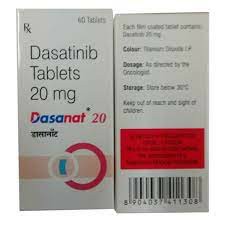
Compared with the traditional leukemia drug imatinib, dasatinib has a higher affinity and can bind more tightly toABL kinase domain. This makes dasatinib more effective in inhibiting BCR-ABL activity, especially in leukemia cell lines that are sensitive to or have developed resistance to imatinib.
Studies have shown that dasatinib can overcome imatinib resistance caused by mutations in the BCR-ABL kinase domain. This is because the binding mode of dasatinib does not rely on direct interactions with these mutated residues. In addition, dasatinib can also inhibit alternative signaling pathways caused by activation of SRC family kinases and the overexpression of multidrug resistance genes, thereby further enhancing its anti-tumor activity.
Overall, dasatinib provides a new and effective treatment option for leukemia patients through its unique targeting mechanism and multi-target inhibition.
[ 免责声明 ] 本页面内容来自公开渠道(如FDA官网、Drugs官网、原研药厂官网等),仅供持有医疗专业资质的人员用于医学药学研究参考,不构成任何治疗建议或药品推荐。所涉药品可能未在中国大陆获批上市,不适用于中国境内销售和使用。如需治疗,请咨询正规医疗机构。本站不提供药品销售或代购服务。


