
.jpeg)
Can taking dasatinib cure the disease?
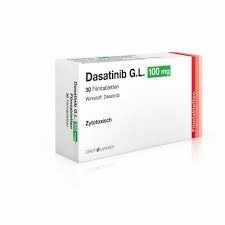
Dasatinib (Dasatinib) is a drug used to treat leukemia and is suitable for the treatment of certain chronic myeloid leukemias and adult acute lymphoblastic leukemias. However, whether a condition can be completely cured depends on the type of disease and the patient's individual circumstances. Dasatinib can effectively control the progression of the disease and improve the survival rate of patients, but it does not guarantee a complete cure.
Dasatinib is an oral, potent second-generation TKI approved by the U.S. Food and Drug Administration (FDA) in 2010 for the treatment of newly diagnosed chronic myeloid leukemia (CML) patients in the chronic phase (100 mg once daily) and in any phase of the disease that is resistant or intolerant to prior therapy (70 mg twice daily). InPh+ acute lymphoblastic leukemia (ALL), dasatinib may also be used with a 70 mg twice daily regimen.
Dasatinib inhibits BCR-ABL, SRC (v-SRC sarcoma viral oncogene homolog) family kinases (including SRC, LCK, LYN, FYN, YES, HCK, FGR, BLK, YRK), receptor kinases (c-KIT, PDGFRβ, DDR 1 and 2, c-FMS, ephrin receptor) and TEC family kinases (TEC and BTK). Dasatinib, which has a thiazole carboxamide structure, binds to both active and inactive conformations of BCR-ABL1, whereas imatinib only inhibits the inactive conformation. It was effective against 18 of 19 imatinib-resistant BCR-ABL mutations, except for the T315I mutation. Results obtained from a large number of previous studies indicate that dasatinib is superior to imatinib in terms of clinical outcomes, including hematological and cytogenetic responses, and is more active (325- to 350-fold) against BCR-ABL1.
Multiple studies have shown that dasatinib has better clinical efficacy than imatinib in patients with drug resistance and intolerance, as well as in patients with newly diagnosed chronic myelogenous leukemia. The DASISION study was conducted in patients with untreated chronic phase chronic myelogenous leukemia to compare doses of imatinib and dasatinib at 400 and 100 mg/day, respectively. Analysis of long-term outcomes showed that dasatinib was associated with faster and more profound molecular responses (MR), major molecular responses, and CCyR. Progression-free survival (PFS) and overall survival (OS) were high in both groups, but patients in the dasatinib group responded earlier and had fewer CML-related deaths.
Another trial evaluated different doses of dasatinib in patients who were resistant or intolerant to imatinib. The results show that dailyThe 100 mg dose was associated with better tolerability. It can be seen that dasatinib treatment responds faster and the long-term clinical benefits have also improved, but it cannot completely cure the disease at present. If patients need to use dasatinib for treatment, they should do so under the guidance of a doctor.
[ 免责声明 ] 本页面内容来自公开渠道(如FDA官网、Drugs官网、原研药厂官网等),仅供持有医疗专业资质的人员用于医学药学研究参考,不构成任何治疗建议或药品推荐。所涉药品可能未在中国大陆获批上市,不适用于中国境内销售和使用。如需治疗,请咨询正规医疗机构。本站不提供药品销售或代购服务。


