
.jpeg)
Instructions for taking Ensidipine
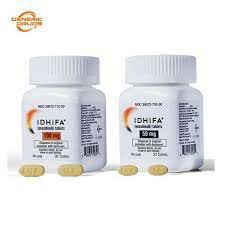
Enasidenib is an oral, targeted inhibitor indicated for the treatment of patients with newly diagnosed, refractory, or relapsed acute myeloid leukemia (AML), specifically those with IDH2 (isocitrate dehydrogenase 2) mutations. Correct administration of ensidipine is critical to ensuring patients receive the best possible outcome from their treatment. The following are instructions for taking ensidipine:
1. Instructions before taking medication
Before starting to use ensidipine, patients should carefully read the drug instructions provided by the doctor or pharmacist and follow the doctor's instructions.
Be sure to tell your doctor or pharmacist of all prescription, over-the-counter, herbal supplements, and other medicines you are using to avoid drug interactions.
Always tell your doctor if you are allergic to ensidipine or its ingredients, or if you have ever had an allergic reaction to other medicines.
2. How to take medicine
Ensidipine is usually taken as an oral medication, once daily, 100mg each time.
Patients should take ensidipine at the prescribed dose and frequency under the guidance of a physician. Dosage and frequency of administration are usually determined by the physician based on the patient's condition and individual circumstances, and may need to be adjusted based on response to treatment.
Ensidipine can be taken with or without food, depending on individual tolerance. If gastrointestinal discomfort occurs, you may choose to take it after meals.
3. Drug storage
Ensidipine should be stored in the original packaging, away from light and moisture, and the storage temperature is generally between15-30 degrees Celsius.
Keep Ensidipine out of the reach of children to prevent accidental ingestion.
4. If you miss a dose
If a patient misses a dose, the untaken dose should be refilled as soon as possible at the earliest point after the patient becomes aware of the missed dose. However, if it is very close to the next scheduled dose, you should skip the missed dose and continue with the next dose as originally planned.
Please do not increase your dose just because you missed a dose to avoid overdose.
5. In case of overdose
If a patient accidentally takes more than the prescribed dose of ensidipine, seek medical attention immediately or contact your local poison control center for help. Excessive use of ensidipine may cause serious adverse reactions.
6. Continuous monitoring and follow-up
During the period of using ensidipine, patients should receive regular follow-up and examinations arranged by their doctor to monitor treatment response and the occurrence of adverse reactions.
Doctors may perform blood tests, liver function tests, and other related tests to ensure treatment effectiveness and patient safety.
7. Timely reporting of adverse reactions
If you have any symptoms or adverse reactions while using ensidipine, tell your doctor or pharmacist immediately. These may include nausea, vomiting, diarrhea, fatigue, headache, abnormal liver function, etc. Prompt reporting of adverse reactions can help to take early measures to prevent further worsening of symptoms.
Proper administration of ensidipine is key to ensuring therapeutic efficacy and patient safety. Patients should follow the doctor's guidance and recommendations, take the medication at the prescribed dosage and frequency, and receive regular follow-up visits and examinations arranged by the doctor. If any discomfort or adverse reactions occur during use, please consult a doctor or pharmacist in time for appropriate treatment and management.
[ 免责声明 ] 本页面内容来自公开渠道(如FDA官网、Drugs官网、原研药厂官网等),仅供持有医疗专业资质的人员用于医学药学研究参考,不构成任何治疗建议或药品推荐。所涉药品可能未在中国大陆获批上市,不适用于中国境内销售和使用。如需治疗,请咨询正规医疗机构。本站不提供药品销售或代购服务。


