
.jpeg)
How long does it take to become resistant to ensidipine? How to deal with drug resistance?
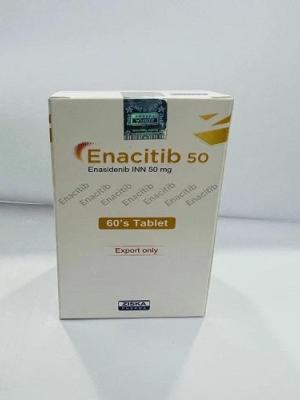
Understanding ensidipine (Enasidenib) resistance and how to manage it is critical for patients and healthcare professionals. Ensidipine is a targeted therapy used to treat a specific type of acute myeloid leukemia (AML), people with IDH2(isocitrate dehydrogenase2) mutations in newly diagnosed, refractory or relapsedAML patients. Although ensidipine has shown significant efficacy in these patients, drug resistance may develop in some patients during its use. The mechanisms, timing of onset, and management strategies of ensidipine resistance will be discussed in detail below.
1. Resistance mechanism:
a. Cell mutations: During ensidipine treatment, AML cells may undergo mutations, resulting in changes in the structure or function of the drug target IDH2, making ensidipine unable to effectively bind to it or inhibit its activity.
b. Activation of auxiliary pathways: During ensidipine treatment, AML cells may bypass the inhibitory effect of ensidipine by activating other pathways, leading to drug resistance.
c. Changes in the tumor microenvironment: Changes in the tumor microenvironment may affect the efficacy of ensidipine, for example, causing ensidipine to be unable to effectively enter tumor cells or changing the responsiveness of tumor cells to drugs.
2. Time of occurrence of drug resistance:
Resistance to ensidipine may occur at any stage of treatment, including during initial treatment or after longer periods of treatment. In some patients, resistance may appear early in treatment, while in other patients, it may take longer to develop resistance.
3. Drug resistance treatment strategies:
a. Regular monitoring: Regular monitoring ofAML patients’ condition and the efficacy of ensidipine is crucial. Signs of drug resistance can be detected early by regularly checking patients' hematology, symptoms, and bone marrow test results.
b. Dose adjustment: Depending on the patient's specific condition, the dose of ensidipine may need to be adjusted. In some cases, increasing the dose may help overcome resistance. However, dosage adjustments should be made under the guidance of a physician and may require consideration of the patient's overall health and other treatment options.
c. Resistance testing: Resistance testing can be performed when the disease progresses or drug resistance is suspected. This may include genetic and molecular analysis of AML cells to determine whether mutations or other abnormalities associated with ensidipine resistance are present.
d. Combination therapy: In some cases, combining ensidipine with other treatments may help overcome resistance. For example, combining ensidipine with other targeted or chemotherapy drugs may produce a synergistic effect and increase the efficacy of treatment.
e. Pursue new treatment options: If significant resistance develops, switching to other treatment options may need to be considered. This may include participating in clinical trials, trying new targeted drugs or chemotherapy regimens, or considering hematopoietic stem cell transplantation.
Understanding the mechanisms of ensidipine resistance and management strategies are critical for both patients and healthcare professionals. Through regular monitoring, dose adjustments, resistance testing, combination therapy, and the pursuit of new treatment options, ensidipine resistance can be better managed and provide better outcomes forAMLpatients. Ultimately, treatment options should be personalized based on the patient's specific situation and clinical manifestations of resistance to maximize treatment success and patient survival.
[ 免责声明 ] 本页面内容来自公开渠道(如FDA官网、Drugs官网、原研药厂官网等),仅供持有医疗专业资质的人员用于医学药学研究参考,不构成任何治疗建议或药品推荐。所涉药品可能未在中国大陆获批上市,不适用于中国境内销售和使用。如需治疗,请咨询正规医疗机构。本站不提供药品销售或代购服务。


