
.jpeg)
The application of trifluridine and tipiracil (Lancever) in colon cancer
Trifluridine and tipiracil (Lonsurf) were approved in 2015 for patients with advanced (metastatic) colorectal cancer who have no longer responded to other treatments, such as certain chemotherapy and biological therapies. In August 2023, trifluridine tipiracil combined with bevacizumab was approved for the treatment of adult patients with metastatic colorectal cancer (mCRC) who have previously received other therapies but no longer responded. Trifluridine and tipiracil are classified as nucleoside metabolism inhibitors that incorporate directly into DNA and interfere with its function. Blood levels of trifluridine are maintained by the enzyme inhibitor tipiracil.
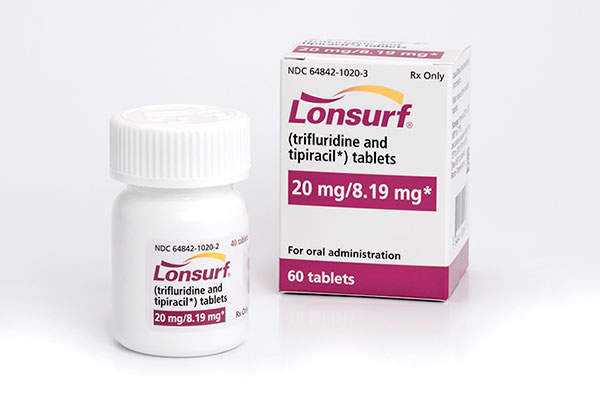
In a colorectal cancer clinical study of trifluridine tipiracil alone, half of the patients treated with trifluridine tipiracil tablets survived 7.1 monthsHalf of the patients treated with placebo survived 5.3 months, a statistically significant result. Patients in the trifluridine-tipiracil group survived from 6.5 months to 7.8 months, compared with 4.6 months to 6 months in the placebo group. On average, patients treated with trifluridine-tipiracil took 2 months to develop their cancer, and 88% experienced disease progression or death.
In the phase 3 SUNLIGHT trial, when trifluridine-tipiracil was combined with bevacizumab, half of the patients with metastatic colorectal cancer lived 10.8 months, compared with only 7.5 months in the trifluridine-tipiracil group, a 39% reduction in the risk of death. In this study, progression-free survival (PFS) was 5.6 months for half of the patients who received trifluridine plus bevacizumab, compared with 2.4 months for those who received trifluridine and bevacizumab alone. This resulted in a 56% relative risk reduction in disease progression.
[ 免责声明 ] 本页面内容来自公开渠道(如FDA官网、Drugs官网、原研药厂官网等),仅供持有医疗专业资质的人员用于医学药学研究参考,不构成任何治疗建议或药品推荐。所涉药品可能未在中国大陆获批上市,不适用于中国境内销售和使用。如需治疗,请咨询正规医疗机构。本站不提供药品销售或代购服务。


