
.jpeg)
Enzalutamide (enzalutamide) effects and efficacy
Enzalutamide (Enzalutamide) is an oral antiandrogen used primarily to treat advanced prostate cancer. Its mechanism of action and efficacy have attracted widespread attention in the medical field. The following is a detailed explanation of the functions and efficacy of enzalutamide:
Mechanism of action:
Enzalutamide's main action is to treat prostate cancer by inhibiting the androgen receptor (Androgen Receptor, AR). Prostate cancer often depends on androgens for growth, and androgen receptors play a key role in this process. Enzalutamide intervenes in this process through a variety of mechanisms:
1.Competitively binds to androgen receptors:Enzalutamide (enzalutamide) binds with androgen receptors to prevent the binding of androgens, thus blocking the growth signals of androgens to tumor cells.
2.Inhibit the entry of androgen receptors into the cell nucleus: The androgen receptors will enter the cell nucleus after binding androgens, and affect gene transcription, thereby promoting tumor cell proliferation. Enzalutamide blocks this process, reducing the ability of tumor cells to proliferate.
3.Inhibition of androgen synthesis: In addition to affecting the androgen receptor,enzalutamide (enzalutamide) also inhibits the synthesis of androgens in the body, thereby reducing the level of androgens in the blood and reducing the stimulation of tumor cells.
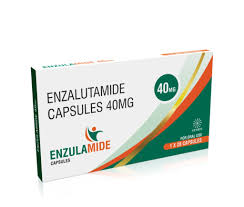
Therapeutic efficacy:
1. Treatment can significantly extend progression-free survival in prostate cancer patients. This means that the patient's tumor growth rate is effectively controlled during treatment and the risk of disease progression is reduced.
2.Improve overall survival (Overall Survival, OS): In addition to extending progression-free survival, enzalutamide (enzalutamide) can also improve overall survival in patients with prostate cancer. This means patients are able to survive longer with enzalutamide, improving patient outcomes.
3.Relieve symptoms:Enzalutamide (enzalutamide) Treatment can also relieve symptoms of prostate cancer patients, including difficulty urinating, bone pain, fatigue, etc. Relief of these symptoms can significantly improve the patient's quality of life.
4.Reduce bone metastasis: Prostate cancer often metastasizes to bones, causing complications such as bone pain and fractures. Enzalutamide (enzalutamide)Treatment can reduce the occurrence of bone metastases, relieve patients' pain and improve their quality of life.
Indications:
Enzalutamide (enzalutamide) is mainly suitable for the treatment of advanced prostate cancer, including metastatic and non-metastatic prostate cancer. Enzalutamide (enzalutamide) is often an important treatment option for patients who have had poor response to hormone therapy or chemotherapy.
Security:
In clinical trials, the main adverse reactions of enzalutamide (enzalutamide) include fatigue, dizziness, headache, high blood pressure, joint pain, etc. These adverse reactions are generally mild to moderate and often resolve when the drug is discontinued or the dose is adjusted.
Although enzalutamide treatment can improve the overall survival of prostate cancer patients, there are also some adverse reactions, including depression, arrhythmia, abnormal liver function, etc. Therefore, patients' medical condition should be closely monitored while using enzalutamide and treatment should be adjusted as needed.
In summary, enzalutamide (enzalutamide) As an oral antiandrogen, it plays an important role in the treatment of advanced prostate cancer. By inhibiting androgen receptors, it prolongs progression-free survival, improves overall survival, relieves symptoms and other mechanisms, providing patients with effective treatment options and improving their quality of life. However, adverse reactions still need to be closely monitored during use and individualized treatment based on the patient's specific conditions.
[ 免责声明 ] 本页面内容来自公开渠道(如FDA官网、Drugs官网、原研药厂官网等),仅供持有医疗专业资质的人员用于医学药学研究参考,不构成任何治疗建议或药品推荐。所涉药品可能未在中国大陆获批上市,不适用于中国境内销售和使用。如需治疗,请咨询正规医疗机构。本站不提供药品销售或代购服务。


