
.jpeg)
Must-read for patients: Overview of basic information on obeticholic acid’s Chinese instructions
1. Common name: Obeticholic acid, Obeticholic acid
Product name: Ocaliva
2. Who can use obeticholic acid? Indications?
Obeticholic acid (Obeticholic acid) is suitable for the treatment of adult patients with primary biliary cholangitis (PBC), including:
1. No liver cirrhosis or;
2. For compensated cirrhosis without evidence of portal hypertension,
Obeticholic acid is used either in combination with ursodeoxycholic acid (UDCA) who have an inadequate response toUDCA or as monotherapy in patients who cannot tolerate UDCA.
This indication is approved under accelerated approval on the basis of alkaline phosphatase (ALP) reduction. Improvements in survival or disease-related symptoms have not been determined.
3. What are the side effects of obeticholic acid?
Common side effects of obeticholic acid include itching, fatigue, abdominal pain and discomfort, rash, joint pain, sore throat, pain, dizziness, constipation, peripheral edema, palpitations, fever, thyroid dysfunction, eczema, etc. The most common side effects include itching and fatigue; itching may lead to discontinuation of treatment. After obeticholic acid was put on the market, side effects of hepatobiliary diseases such as liver failure, new-onset cirrhosis, increases in direct and total bilirubin, and new or worsening jaundice have also occurred.
4. How should you take obeticholic acid?
1. Recommended dose: Obeticholic acid is available in the form of oral tablets. Patients who need to be treated with this drug do not have evidence of portal hypertension and have not achieved an adequate biochemical response to an appropriate dose of UDCA for at least 1 year, or are intolerant to UDCA. The recommended dose is 5 mg orally once daily during the first 3 months of drug treatment, increasing to a maximum dose of 10 mg once daily after the first 3 months in patients who have insufficient reductions in alkaline phosphatase (ALP) and/or total bilirubin and in patients who tolerate obeticholic acid .
2. Medication management: Patients can take obeticholic acid regardless of whether they are eating or not; For patients taking bile acid binding resin, take it at least4 hours before or 4 hours after taking bile acid binding resinobeticholic acid, or as long as possible.
5. How to store obeticholic acid?
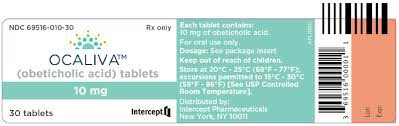
Obeticholic acid tablets are packaged in a40 mL high-density polyethylene bottle, closed with a 33 mm polypropylene child-resistant cap with an induced seal; storage temperature 20°C to 25°C (68°F to 77°F); tolerance to 15°C to 30°C (59°F to 86°F) allowed.
6. How does obeticholic acid work?
Obeticholic acid is an agonist for FXR, a nuclear receptor expressed in the liver and intestine. FXR is a key regulator of bile acid, inflammation, fibrosis, and metabolic pathways. FXR activation reduces intrahepatocyte bile acid concentrations by inhibiting de novo cholesterol synthesis and by increasing bile acid transport from hepatocytes. These mechanisms limit the overall size of the circulating bile acid pool while promoting bile secretion, thereby reducing hepatic exposure to bile acids.
7. What will happen if you take too much obeticholic acid?
In clinical trials,PBC patients treated with obeticholic acid 25 mg once daily (2.5 times the highest recommended dose) or 50 mg once daily (5 times the highest recommended dose) had a dose-dependent increase in the incidence of liver adverse reactions, including elevated liver biochemical tests, ascites, jaundice, portal hypertension, and episodes of primary cholangitis. Serious hepatic adverse reactions have been reported in post-marketing patients with decompensated cirrhosis of PBC who take obeticholic acid more frequently than recommended; these adverse reactions have also been reported in some patients receiving recommended doses. In the event of overdose, the patient should be carefully observed and given supportive care as appropriate.
8. Who cannot use obeticholic acid?
Obeticholic acid is contraindicated in patients with decompensated cirrhosis (e.g.Child-Pugh class B or C), compensated cirrhosis with past decompensation events or evidence of portal hypertension (e.g. ascites, gastroesophageal varices, sustained thrombocytopenia), or complete biliary obstruction.
9. Precautions for obeticholic acid:
In clinical studies of obeticholic acid, warnings and precautions such as liver decompensation and failure, severe pruritus, and reduced HDL-C in patients with cirrhosis have emerged. Discontinue and resume at reduced dose upon recovery, or permanently discontinue based on severity.
[ 免责声明 ] 本页面内容来自公开渠道(如FDA官网、Drugs官网、原研药厂官网等),仅供持有医疗专业资质的人员用于医学药学研究参考,不构成任何治疗建议或药品推荐。所涉药品可能未在中国大陆获批上市,不适用于中国境内销售和使用。如需治疗,请咨询正规医疗机构。本站不提供药品销售或代购服务。


