
.jpeg)
Observational study shows first-line ibrutinib with or without rituximab is safe and effective in low-risk mantle cell lymphoma
Ibrutinib with or without rituximab is an effective and tolerable first-line treatment option for patients with mantle cell lymphoma (MCL), according to results from a multicenter, real-world observational cohort study.
Grade 3 or higher toxicities occurred in 20.3% of patients; 33.8% of patients required ibrutinib dose reduction or delay; 41.6% of patients experienced disease progression (PD; 22.1%), toxicity (8.1%), death from any cause (5.4%), patient selection (0.7%), and unexplained/other (5.4%). Among patients who discontinued treatment, the median duration of treatment interruption was 136 days (range, 5-918 days) and the median duration of toxicity-related interruption was 67 days (range, 5-437 days).
Among the 104 patients evaluated for response, the overall response rate (ORR) was 71.2%, including a radiographic complete response (CR) rate of 20.2%. The ORR for patients who received ibrutinib plus rituximab was 78.7% versus 64.9% (odds ratio [OR], 2.0; 95% confidence interval, 0.84-5.00; p=0.135). The relative response rates for these two cohorts were 27.7% and 14.0%, respectively (OR, 2.3; 95% confidence interval, 0.89-6.35; p=0.093).
In 2019, 370 people were evaluated in Phase 2 PCYC-1104-CA (NCT 01236391), Phase 2 SPARK (NCT 01599949) and Phase 3 RAY (NCT 01646021), a pooled analysis of 3.5 years of follow-up data for patients with relapsed/refractory MCL treated with ibrutinib in the trial showed that the drug's most favorable outcomes occurred in the second-line setting.
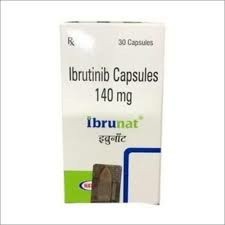
This observational cohort study included 149 adults with previously untreated MCL from 43 centers who received at least 1 dose of ibrutinib with or without rituximab. The target dose of ibrutinib is 560 mg once daily, and patients continue treatment until disease progression, unacceptable toxicity, death, or discontinuation for other reasons. Patients received optional intravenous or subcutaneous rituximab 375 mg/m2 or 1400 mg at clinician discretion for up to six 28-day cycles. In addition to optional ibrutinib cycles, maintenance therapy with rituximab is allowed for up to 2 years.
Assess patients for treatment toxicity, response, and survival. High risk was also assessedTreatment outcomes in patients with MCL. The primary outcomes were ORR and overall survival (OS). Key secondary outcomes include progression-free survival (PFS) in patients with PD, incidence of toxicity related to ibrutinib discontinuation and dose reduction, and OS after ibrutinib discontinuation. The median follow-up time was 15.6 months (range, 0-31.0), and all patients received at least 1 cycle of ibrutinib treatment, with a median of 8 cycles (range, 1-33 cycles). 92% of patients started taking the full dose of ibrutinib.
Thirty-nine percent of patients received rituximab in combination with ibrutinib, for a median of 6 cycles (range, 1-17 cycles). Additionally, 42.6% of patients had received more than 6 cycles of rituximab at the time of analysis, although data were missing for 1 patient. ECOG PS of 0 versus 1 versus 2 versus 4 was significantly associated with rituximab use, and a trend toward an association between the presence of bulky disease and rituximab use and the absence of high-risk features was observed.
A total of45 patients could not be included in the efficacy analysis because data were missing or their response was assessed using only clinical criteria. Among patients with low-risk MCL or missing data, and among those with at least 1 high-risk feature, the corresponding ORRs were 77.3% and 59.0%. The complete response rates for these two cohorts were 20.5% and 19.7%, respectively. Among patients who met high-risk sMIPI criteria, the ORR and CR rates were 23.5% and 17.3%, respectively, for patients with low-risk or intermediate-risk sMIPI criteria.
In the group of patients who did and did not receive radiation response assessment, 93 patients were followed for at least 6 months, with 87.1% of patients continuing treatment 6 months after starting ibrutinib. The median time was 17.9 months (range, 5.9-28.7 months), and 76.2% of patients achieving CR were receiving treatment. Among these patients, 8 patients with high-risk characteristics achieved CR, of whom 1 died of COVID-19 and 2 survived PD.
A total of26.2% of patients progressed after taking ibrutinib. The estimated median PFS for the entire patient cohort was 26.0 months, and the 12-month PFS rate was 61.8%. Median PFS was NR and 13.7 months in patients with low-risk and high-risk disease, respectively, and the estimated median OS in the entire patient cohort was NR, with a 12-month OS rate of 69.4%. Among patients who experienced PD at any time, the median time to progression was 5.2 months.
To confirm the forecastUnivariate analysis of baseline characteristics of PFS and OS showed that the presence of at least 1 high-risk feature was significantly associated with shorter PFS and OS, but not the presence of sMIPI criteria. Median PFS was NR (range, NR-NR) and 13.7 months (range, 5.49-NR) in patients with low-risk and high-risk disease, respectively (HR, 2.19; 95% confidence interval, 1.28-3.73; p = .004). Median OS for patients with low-risk features was NR (range, NR-NR), compared with 14.8 months (range, 11.3-NR) for patients with high-risk features (HR, 2.36; 95% confidence interval, 1.35-4.27; p = .005).
Multivariate analysis showed that ECOG PS≥2 and pleomorphic/blastoid histology were strong predictors of poor prognosis with ibrutinib in second-line therapy. Another model showed that the presence of at least 1 high-risk feature and poor ECOG PS strongly and independently predicted adverse outcome when adjusting for other features. A third model confirmed that these findings were consistently predictive of adverse outcomes.
The median survival after ibrutinib treatment was 1.4 months, and the median survival for patients who received subsequent treatment (41.9%) was 8.6 months, while the median survival for patients who did not receive subsequent treatment was 0.6 months. The best responses to second-line therapy were CR (23.1%), partial response (3.8%), stable disease (3.8%), PD (34.6%), and unknown (34.6%). Of note, no patient received consolidation therapy with autologous stem cell transplantation. The median time to ibrutinib progression among patients receiving second-line therapy was 5.5 months.
[ 免责声明 ] 本页面内容来自公开渠道(如FDA官网、Drugs官网、原研药厂官网等),仅供持有医疗专业资质的人员用于医学药学研究参考,不构成任何治疗建议或药品推荐。所涉药品可能未在中国大陆获批上市,不适用于中国境内销售和使用。如需治疗,请咨询正规医疗机构。本站不提供药品销售或代购服务。


