
.jpeg)
How long does it take to become resistant to Dasatinib? How to deal with drug resistance?
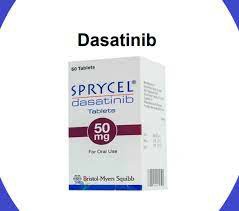
Dasatinib (Dasatinib) is a targeted therapy drug mainly used to treat patients with chronic myeloid leukemia (CML) and some acute lymphoblastic leukemia (ALL). Although dasatinib (Dasatinib) shows good efficacy in many patients, as treatment continues, some patients may develop drug resistance, resulting in reduced or ineffective treatment effects. The following will introduce in detail the formation mechanism, monitoring methods and response strategies of resistance to dasatinib (Shidazai).
1.Resistance mechanism:
Dasatinib (Stardas) The mechanisms of drug resistance mainly include the following aspects:
BCR-ABLMutation: During the long-term use of Dasatinib (Startaxed), some patients may develop mutations in the BCR-ABL gene, causing Dasatinib (Startaxed) to be ineffective. Common drug resistance mutations include T315I, Y253H, E255K/V, etc.
BCR-ABLNon-mutagenic resistance mechanisms: In addition to gene mutations, there are also some non-mutagenic resistance mechanisms, such as leukocytosis, up-regulation of ABC transporter expression, etc. These mechanisms may also lead to the weakening of the therapeutic effect of dasatinib (Stacer).
2.Resistance monitoring:
Monitoringdasatinib Resistance methods mainly include the following:
Molecular biology monitoring: By regularly detecting the BCR-ABL gene in the patient's blood or bone marrow, mutations can be discovered in time to guide treatment adjustments.
Clinical monitoring: Changes in clinical manifestations of patients during treatment, such as an increase in white blood cell count and an increase in the proportion of leukemia cells, may indicate the occurrence of drug resistance.
3.Coping strategies:
Once dasatinib resistance is found, corresponding treatment strategies should be adopted, including:
Resistance caused by gene mutations: For patients with specific mutations, it may be necessary to consider switching to other targeted therapies, such as nilotinib (Nilotinib), boletinib (Bosutinib), apatinib (Apatinib), etc. These drugs may have better sensitivity to specific mutations.
Combination application of targeted therapy: Some studies have shown that the combined use of targeted therapy drugs with different mechanisms may have a synergistic effect and can overcome drug resistance. Therefore, for drug-resistant patients, dasatinib (Dasatinib) may be considered in combination with other targeted therapies.
Immunotherapy: In recent years, the application of immunotherapy in the treatment of leukemia has received increasing attention. For some drug-resistant patients, immunotherapy may be an effective option, such as CAR-T cell therapy.
4.Individualized treatment strategies:
For each drug-resistant patient, the treatment strategy should be individualized. The patient's age, condition, gene mutation type, comorbidities and other factors need to be comprehensively considered to formulate the most appropriate treatment plan.
5.Clinical trials and new drugs:
With the continuous advancement of medical technology, more and more new drugs and treatments are being developed. For patients who are resistant to Dasatinib (Startaxed) , you can consider participating in clinical trials and trying new treatment options.
Overall,dasatinib The occurrence of drug resistance is a common problem during treatment, but through effective monitoring and individualized treatment strategies, drug resistance can be effectively dealt with and the survival time and quality of life of patients can be prolonged. Patients and doctors should work closely together to adjust treatment plans in a timely manner in order to obtain the best treatment results.
[ 免责声明 ] 本页面内容来自公开渠道(如FDA官网、Drugs官网、原研药厂官网等),仅供持有医疗专业资质的人员用于医学药学研究参考,不构成任何治疗建议或药品推荐。所涉药品可能未在中国大陆获批上市,不适用于中国境内销售和使用。如需治疗,请咨询正规医疗机构。本站不提供药品销售或代购服务。


