
.jpeg)
Venetex plus HMA therapy shows encouraging results in high-risk MDS/CMML
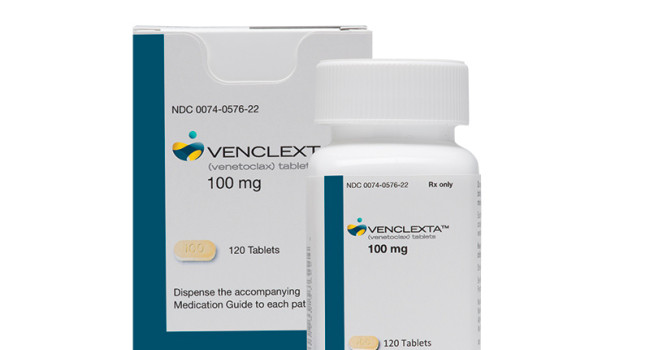
Oral decitabine plus cedazuridine and venetoclax is safe in most patients with high-risk myelodysplastic syndromes (MDS) and chronic myelomonocytic leukemia (CMML), according to early analysis of a Phase 1/2 trial, although longer follow-up is needed. This Phase 1/2 study evaluated the potential activity and safety of the oral combination and venetoclax in 39 patients as part of a single-center, dose-escalation and dose-expansion trial.
MDS is a hematopoietic stem cell tumor with an increased risk of transforming into acute myeloid leukemia (AML). The only curative therapy for high-risk MDS is allogeneic hematopoietic stem cell transplantation (HSCT), and patients who are not candidates for HSCT are often treated with hypomethylating agents (HMAs) such as azacytidine or decitabine. Previous research found that venetoclax combined with HMAs had "moderate" benefit in patients who had relapsed AML or MDS after hematopoietic stem cell transplantation. However, the authors of the new study note that HMA treatment requires prolonged parenteral administration and results in complete remission in only 15 to 20 percent of high-risk MDS patients.
Enrolled patients had never been previously treated for high-risk MDS or CMML, and their median age was 71 years (range, 27-94 years). The majority (72%) were male. Overall, 32 (82%) patients had hyperblastoid MDS, 6 (15%) had CMML, and 1 (3%) had atypical chronic myelogenous leukemia, which was included because of biological similarity to CMML. The median number of mutations per patient was 3 (range 1-14), with the most common mutations being ask L1 (49%), runx 1 (36%), SRS F2 (31%), Tet2 (23%), and TP53 (21%).
Phase Dose escalation was evaluated using a 3+3 design in Phase 1, which determined the recommended combination dose for Phase 2. In Phase 1, 3 patients were enrolled at dose levels; if no patients experienced dose-limiting toxicities during the first cycle (day 28), the next 3 patients were enrolled at the next dose level. However, if any patient develops dose-limiting toxicities, the next 3 patients will be enrolled at the same dose level. If 2 of 6 patients experience dose-limiting toxicities, the maximum tolerated dose is exceeded. Phase 2 is being conducted using the maximum tolerated dose defined in Phase 1.
The fixed daily dose for the oral combination is35 mg of decitabine and 100 mg of cedazuridine, while venetoclax was titrated up. Because no patients experienced dose-limiting toxicities during Phase 1, the Phase 2 dose of venetoclax on days 1 to 14 was 400 mg.
All patients experienced one or more treatment-emergent adverse events (TEAEs), with a median of 11 TEAEs of any grade per patient. The most common were thrombocytopenia (87%), neutropenia (77%), fatigue (59%), edema (36%), and constipation (33%). Grade 3 TEAEs occurred in 77% of patients and grade 4 TEAEs occurred in 87% of patients. The most common grade 3-4 TEAEs were thrombocytopenia (85%), neutropenia (74%), febrile neutropenia (21%), and anemia (18%). At 8 weeks, the cumulative mortality rate was 2.6% (95% CI, 0%-7.8%)
At the time of analysis,8 patients were still in the trial. Nineteen patients discontinued treatment because they were undergoing HSCT. Two patients experienced AML transformation, and 1 patient each withdrew due to patient decision, physician decision, disease progression, and lack of response.
The overall response rate95% (95% CI, 83%-99%), of which 44% (95% CI, 28%-60%) of patients had a complete response, 26% (95% CI, 13%-42%) of patients had a complete bone marrow response with hematological improvement, and 26% (95% CI, 13%-42%) of patients had a complete bone marrow response. With a median follow-up of 10.8 months, median overall survival (OS) was not reached, while median event-free survival was 17.9 months. 1-year OS is 59%. Approximately half (49%) of patients received a median of 2 cycles of HSCT before HSCT. Of the patients who underwent HSCT, 15 had MDS, 3 had CMML, and 1 had atypical chronic myelogenous leukemia. The median time to HSCT was 3.7 months. After HSCT, 3 patients relapsed and 4 patients died. Median OS after HSCT was not reached.
The single-arm, non-randomized study design conducted at a single institution is a limitation of the study due to the small number of patients with short follow-up and incomplete longitudinal genetic data to assess molecular response. Definitive conclusions about the benefits of venetoclax await completion of the VERONA phase 3 randomized trial (NCT04401748), which is studying patients with high-risk myelodysplastic syndromes with or without venetoclax and injectable azacytidine.
[ 免责声明 ] 本页面内容来自公开渠道(如FDA官网、Drugs官网、原研药厂官网等),仅供持有医疗专业资质的人员用于医学药学研究参考,不构成任何治疗建议或药品推荐。所涉药品可能未在中国大陆获批上市,不适用于中国境内销售和使用。如需治疗,请咨询正规医疗机构。本站不提供药品销售或代购服务。


