
.jpeg)
What disease does giritinib (segatan) treat?
Gilteritinib is a targeted therapy drug for leukemia. Specifically, it is used to treat certain types of acute myeloid leukemia (AML), known as acute myeloid leukemia.
Acute myeloid leukemia is a malignant hematological disease characterized by the abnormal proliferation and accumulation of white blood cells in the bone marrow, resulting in the suppression of normal hematopoietic function. This abnormal white blood cell usually fails to mature properly and instead remains in an early stage, unable to complete its normal functions. Acute myeloid leukemia can be divided into multiple subtypes, including those with FLT3 gene mutations, such as FLT3-ITD (internal tandem duplication) and FLT3-TKD (tyrosine kinase domain) mutations.
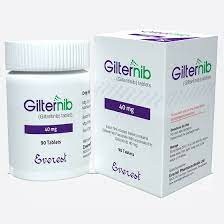
Giritinib blocks the proliferation and survival of leukemia cells by inhibiting the activation ofFLT3 receptors, thereby effectively slowing down the progression of leukemia. For patients with AML mutations in FLT3, the goal of geritinib treatment is to reduce the number of leukemia cells, improve the patient's remission rate, and extend the patient's survival.
However, it is important to note that gilitinib is not suitable for all types ofAML. Clinical evaluation and genetic testing should be performed before treatment to determine whether the patient has the FLT3 mutation and whether he or she is suitable for treatment with giritinib.
In general, giritinib, as a targeted therapy, has been shown to have significant efficacy in certain types of acute myeloid leukemia, providing an important treatment option for these patients.
[ 免责声明 ] 本页面内容来自公开渠道(如FDA官网、Drugs官网、原研药厂官网等),仅供持有医疗专业资质的人员用于医学药学研究参考,不构成任何治疗建议或药品推荐。所涉药品可能未在中国大陆获批上市,不适用于中国境内销售和使用。如需治疗,请咨询正规医疗机构。本站不提供药品销售或代购服务。


