
.jpeg)
Which one is better: brigatinib/brigatinib or aletinib?
To date, there are no head-to-head trials comparing brigatinib/Brigatinib and alectinib (Alectinib) in anaplastic lymphoma kinase (ALK) rearrangement-positive (ALK-p), ALK inhibitor-negative, advanced non-small cell lung cancer (NSCLC) with central nervous system (CNS) metastases. Brigatinib and alectinib are both targeted drugs currently used in the treatment of non-small cell lung cancer.
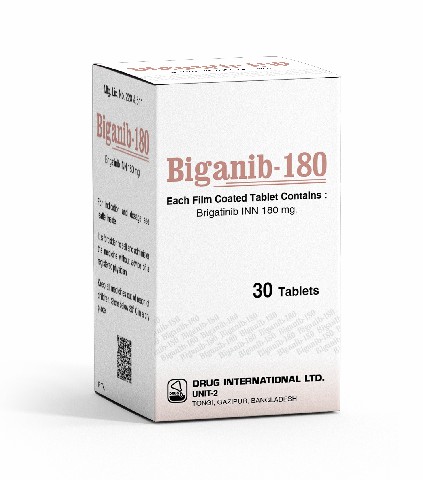
Brigatinib is approved by the U.S. Food and Drug Administration (FDA) as an ALK inhibitor for use only in patients who have progressed or are intolerant to the first-generation ALK TKI crizotinib. Therefore, it is a second-generation ALK inhibitor that can block the growth and spread of tumor cells by inhibiting the activity of ALK protein. Brigatinib has strong anti-tumor activity and may be a better choice for patients who have developed resistance mutations to alectinib. Alectinib is also an ALK inhibitor and is widely used in the first-line treatment of ALK-positive non-small cell lung cancer. It inhibits the proliferation and survival of tumor cells by binding to the ALK protein in the body. Alectinib has shown significant efficacy in first-line treatment and is generally well tolerated.
A Phase III study comparing the efficacy and safety of brigatinib and alectinib in patients whose cancer relapses during treatment with crizotinib is currently underway. Regarding cases that are refractory to ALK inhibitor treatment, a phase III study of ALK-p and advanced non-small cell lung cancer that is refractory to ALK inhibitor treatment showed that the PFS of patients treated with brigatinib was significantly longer than that of patients treated with crizotinib. Brigatinib was reported to be relatively tolerable.
[ 免责声明 ] 本页面内容来自公开渠道(如FDA官网、Drugs官网、原研药厂官网等),仅供持有医疗专业资质的人员用于医学药学研究参考,不构成任何治疗建议或药品推荐。所涉药品可能未在中国大陆获批上市,不适用于中国境内销售和使用。如需治疗,请咨询正规医疗机构。本站不提供药品销售或代购服务。


