
.jpeg)
How effective is mitotane in the treatment of adrenocortical cancer?
Mitotane (Mitotane) is one of the first-line drugs for the treatment of adrenocortical cancer, and its efficacy has been verified in clinical trials. The following will introduce in detail the effect of mitotane (mitotane) in the treatment of adrenocortical cancer:
1.Evaluation of treatment effect:
In clinical trials, researchers usually use a variety of indicators to evaluate the effect of mitotane (mitotane) in the treatment of adrenocortical cancer, including tumor shrinkage, survival prolongation, and delay in disease progression. Among them, the degree of tumor shrinkage is often evaluated through imaging examinations (such as CT scans, MRI, etc.), while survival and disease progression are often evaluated through follow-up observation and survival analysis.
2.Clinical trial results:
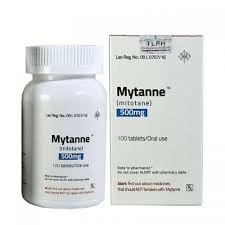
A retrospective study (Luton et al., 2000) showed that mitotane was effective in treating adrenocortical carcinoma at approximately 40% to 60%. Another study (Hahner et al., 2010), after patients received mitotane (mitotane) treatment, the partial tumor shrinkage rate was 33%, and the disease control rate was 42%, and for those patients whose tumors had enlarged before treatment, 37% experienced tumor shrinkage after treatment.
In addition, a study of 35 patients (Wang et al., 2015) showed that among the patients who received mitotane (mitotane) treatment, 17 cases (48.6% pan>) showed tumor shrinkage, and 5 patients (14.3%) had stable conditions, but13 patients (37.1%) experienced disease progression. Overall, the findings suggest that mitotane has some efficacy in the treatment of adrenocortical cancer.
3.Extended survival period:
Although mitotane does not produce a high rate of tumor shrinkage in the treatment of adrenocortical cancer, some studies have shown that it may prolong survival in patients. A retrospective study (Baudin et al., 2001) showed that the median progression-free survival (PFS) of patients treated with mitotane was 11. 7 months, and the median overall survival (OS) was 29.4 months. Another study (Hahner et al., 2010) showed that patients treated with mitotane had a median progression-free survival of 5.3 months and a median overall survival of 14.8 months.
In addition, an international multi-center retrospective study (Fassnacht et al., 2010) showed that the median overall survival of patients treated with mitotane was 42.7 months, while in patients whose tumors had metastasized, the median overall survival was 26.7 months. These data suggest that mitotane may prolong survival in patients with adrenocortical cancer, especially when treated early and when the tumor has not metastasized.
4.Safety and Tolerability:
Althoughmitotane has shown certain efficacy in the treatment of adrenocortical cancer, it may also cause some adverse reactions, such as nausea, vomiting, diarrhea, rash, fatigue, etc. Serious adverse reactions may include liver function damage, thyroid dysfunction, nervous system toxicity, etc. Therefore, when using Mitotane, patients need to closely monitor the occurrence of adverse reactions and conduct reasonable management and treatment under the guidance of a doctor.
In summary, Mitotane (mitotane) As a drug for the treatment of adrenocortical cancer, it has shown certain efficacy in clinical trials and can alleviate tumor growth and prolong the survival of patients. However, it may also cause some adverse reactions, so it is necessary to carefully evaluate the patient's condition and risks when using it, and to carry out reasonable treatment under the guidance of a doctor.
[ 免责声明 ] 本页面内容来自公开渠道(如FDA官网、Drugs官网、原研药厂官网等),仅供持有医疗专业资质的人员用于医学药学研究参考,不构成任何治疗建议或药品推荐。所涉药品可能未在中国大陆获批上市,不适用于中国境内销售和使用。如需治疗,请咨询正规医疗机构。本站不提供药品销售或代购服务。


