
.jpeg)
How long does it take to develop resistance to mitotane? How to deal with drug resistance?
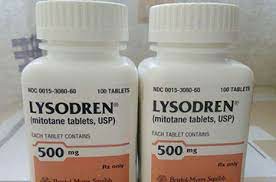
Resistance refers to a situation where patients gradually lose sensitivity to drug treatment, resulting in reduced or ineffective drug efficacy. Mitotane (Mitotane) is a drug commonly used to treat adrenocortical cancer. Although its efficacy is significant, in some cases, patients may develop drug resistance. The following will discuss in detail the mechanisms, identification methods and response strategies of mitotane resistance.
1. Resistance mechanism
Mitotane The resistance mechanism may involve a variety of factors, mainly including:
Increased activity of drug metabolizing enzymes: Tumor cells may accelerate the metabolism of mitotane (mitotane) by increasing the activity of metabolic enzymes, thereby reducing the concentration of the drug in the body and reducing its efficacy.
Increase of drug transporters: The expression of intracellular drug transporters such as P-glycoprotein (P-gp) increases, prompting mitotane (mitotane) to be rapidly excreted from the cells and reducing the intracellular concentration of the drug.
Abnormal cell signaling pathways: The signaling pathways of tumor cells may be mutated or abnormally activated, resulting in a reduction in the therapeutic effect of Mitotane .
Changes in the tumor microenvironment: Changes in the tumor microenvironment may affect the efficacy of Mitotane (mitotane) . For example, hypoxic environment, nutritional deficiencies, etc. will affect the effective concentration of the drug.
2. Identification of drug resistance
Whether a patient has developed drug resistance is mainly identified through the following methods:
Efficacy evaluation: Observe the patient's tumor growth. If the tumor shows significant growth or recurrence after drug treatment, it may indicate that the patient has developed drug resistance.
Drug concentration detection: Determine the drug concentration of mitotane (mitotane) in the patient's body. If the concentration decreases significantly, it may indicate that drug resistance has occurred.
Gene mutation detection: By detecting genetic mutations in tumor tissues, especially genes related to drug metabolism, transport, and signaling pathways, we can evaluate whether patients have genetic mutations related to drug resistance.
3. Coping Strategies
Once a patient develops drug resistance, corresponding response strategies need to be adopted, including:
Adjust the treatment plan: Based on the drug resistance, consider adjusting the treatment plan, which may include changing the drug dosage, using other drugs in combination, selecting new treatment plans, etc.
Drug combination therapy: You can try to combinemitotane with other therapeutic drugs to enhance the effect or extend the validity period of the drug.
Mechanisms related to treatment resistance: For known resistance mechanisms, targeted treatments can be selected, such as the use of drug metabolizing enzyme inhibitors, drug transport inhibitors, etc., to enhance the efficacy of the drug.
Clinical trial participation: For difficult-to-control drug resistance, patients can consider participating in clinical trials to try new treatment options or drugs to find more effective treatment strategies.
Supportive therapy: During the treatment process, patients also need to receive comprehensive supportive therapy, including nutritional support, psychological support, etc., to improve the patient's quality of life and psychological quality.
In summary,mitotane resistance may have an adverse impact on the patient's treatment effect, so it needs to be identified and responded to in a timely manner. In the process of treating drug resistance, it is necessary to comprehensively consider the patient's condition, drug resistance mechanism, and treatment options to achieve the best treatment effect.
[ 免责声明 ] 本页面内容来自公开渠道(如FDA官网、Drugs官网、原研药厂官网等),仅供持有医疗专业资质的人员用于医学药学研究参考,不构成任何治疗建议或药品推荐。所涉药品可能未在中国大陆获批上市,不适用于中国境内销售和使用。如需治疗,请咨询正规医疗机构。本站不提供药品销售或代购服务。


