
.jpeg)
Dacomitinib/Dacomitinib cures cancer
Patients with EGFR-mutated non-small cell lung cancer typically have a progression-free survival of 9 to 13 months when treated with the EGFR tyrosine kinase inhibitors gefitinib or erlotinib. However, drug resistance inevitably develops, thus requiring more effective EGFR inhibitors. Dacomitinib is a covalent pan-HER inhibitor that has shown clinical activity in patients previously treated with gefitinib or erlotinib. A trial of dacomitinib as initial systemic therapy was conducted in clinically and molecularly selected patients with advanced NSCLC.
In this open-label, multicenter, phase 2 trial, patients with untreated advanced lung cancer who had clinical (never smokers [<100 cigarettes/lifetime] or former light smokers [<10 packs/year/lifetime] and ≥15 years since last smoking) or molecular (EGFR mutation, regardless of smoking status) characteristics associated with response to EGFR inhibitor treatment were recruited. We take dacomitinib (45 mg or 30 mg) orally once daily until disease progression, unacceptable toxicity, or patient discontinuation. The activity of dacomitinib was studied in all patients using response assessment criteria from the Solid Tumor Criteria, with baseline scans and at least one post-treatment scan, as well as investigator assessment of response and progression. The primary endpoint was 4-month progression-free survival in the enrolled population, and the null hypothesis for 4-month progression-free survival was 50% or less.
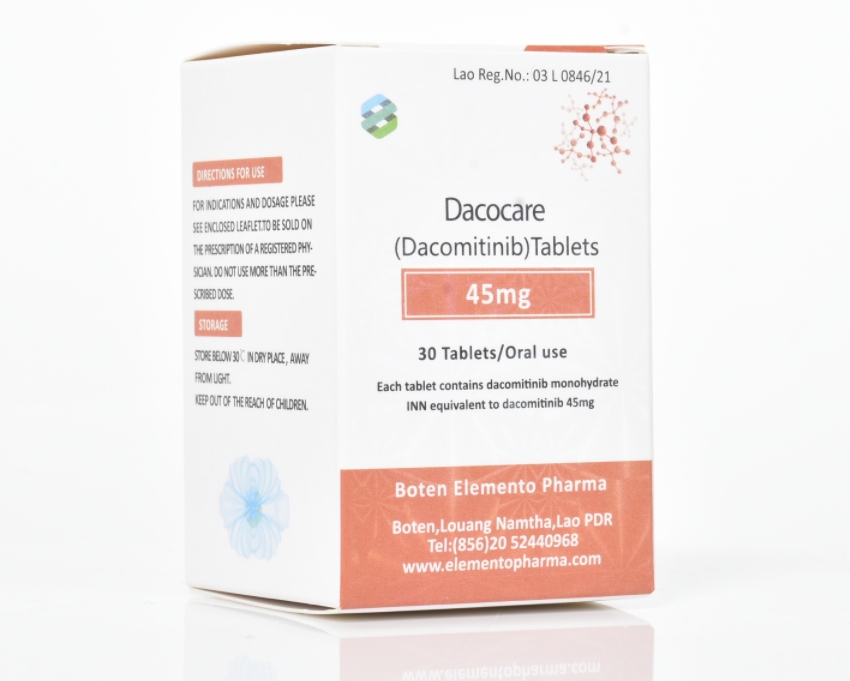
Among these patients, 45 (51%) carried EGFR activating mutations in exon 19 (n=25) or exon 21 (n=20). The 4-month progression-free survival rate was 76.8% (95% CI, 66.4-84.4) in the enrolled population and 95.5% (95% CI, 83.2-98.9) in the EGFR mutation population. The most common all-grade treatment-related adverse events were diarrhea in 83 (93%) patients, dermatitis acneiformis in 69 (78%) patients, dry skin in 39 (44%) patients, and stomatitis in 36 (40%) patients. Two patients (2%) experienced grade 4 treatment-related events (one hypokalemia and one dyspnea). No grade 5 toxicities were recorded. The clinical results therefore suggest that dacomitinib has encouraging clinical activity as initial systemic therapy in clinically or molecularly selected patients with advanced NSCLC.
Cancer is a complex disease and curing it is a multifaceted challenge. Dacomitinib can help in some cases, but it does not completely cure cancer in all patients. The success of cancer treatment also depends on early diagnosis, selection of comprehensive treatment options, and the patient's overall health. Therefore, it is important to work closely with your doctor, follow their recommendations, and have regular follow-up exams to ensure your patient gets the best possible outcome from their treatment.
[ 免责声明 ] 本页面内容来自公开渠道(如FDA官网、Drugs官网、原研药厂官网等),仅供持有医疗专业资质的人员用于医学药学研究参考,不构成任何治疗建议或药品推荐。所涉药品可能未在中国大陆获批上市,不适用于中国境内销售和使用。如需治疗,请咨询正规医疗机构。本站不提供药品销售或代购服务。


