
.jpeg)
Can dacomitinib/dacomitinib and osimertinib be taken together?
Dacomitinib and Osimertinib are approved as first-line treatments for EGFR-mutated non-small cell lung cancer, but resistance may develop. Although the third-generation EGFR inhibitor osimertinib has achieved clinical success as a first-line treatment for EGFR-mutated non-small cell lung cancer, resistance has emerged due to the acquisition of second-site EGFR mutations and other mechanisms, necessitating alternative therapies. The pan-HER inhibitor dacomitinib is approved for first-line treatment and causes acquired EGFR mutations that are different from those that mediate targeted resistance to osimertinib. Therefore, the combination of dacomitinib and osimertinib may induce a more durable response by preventing the emergence of resistance.
Osimertinib is a third-generation irreversible EGFR TKI that has become the first-line treatment standard for patients with EGFR-mutated lung cancer. Osimertinib was initially approved for the treatment of acquired EGFR T790M, the most common mechanism of acquired resistance to early-generation EGFR TKIs, and has since demonstrated superior efficacy in upfront therapy, with improved progression-free and overall survival compared with first-generation EGFR TKIs. Mechanisms of acquired resistance to early osimertinib are still emerging, but acquired EGFR second site mutations of EGFR C797S (the binding site of osimertinib and EGFR) are some common causes.
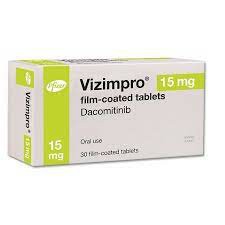
Dacomitinib is a pan-HER tyrosine kinase inhibitor that has also been proven to be effective as a first-line treatment for patients with EGFR mutant lung cancer. In the ARCHER 1050 study, dacomitinib was compared with gefitinib as first-line treatment. The median progression-free survival was 14.7 months for dacomitinib and 9.2 months for gefitinib, leading to approval of dacomitinib in this setting. The most common mechanism of resistance to first- and second-generation EGFR inhibitors is the acquisition of the second-site mutation EGFR T790M9.
Assuming that by preventing the observed acquired EGFR mutation spectrum, combination therapy with dacomitiniband osimertinib may be an effective first-line treatment for patients with advanced EGFR-mutated lung cancer. Specifically, osimertinib is effective in the setting of EGFR T790M, while dacomitinib is effective in the setting of EGFR C797S. This hypothesis is consistent with previous studies demonstrating that combination targeted therapy can delay the emergence of acquired resistance in EGFR-mutated lung cancer.
Since the combination therapy of dacomitinib and osimertinib has not been clinically approved, its effect needs to be verified through clinical trials. In clinical trials, researchers evaluate the efficacy, safety, and patient tolerability of combination drugs. This treatment option is recommended only if it is well demonstrated that the benefits of the combination outweigh the potential risks. Therefore, no matter what kind of medicine is used, patients should follow the doctor's advice and guidance and use the medicine in accordance with the prescribed dosage and usage.
[ 免责声明 ] 本页面内容来自公开渠道(如FDA官网、Drugs官网、原研药厂官网等),仅供持有医疗专业资质的人员用于医学药学研究参考,不构成任何治疗建议或药品推荐。所涉药品可能未在中国大陆获批上市,不适用于中国境内销售和使用。如需治疗,请咨询正规医疗机构。本站不提供药品销售或代购服务。


