
.jpeg)
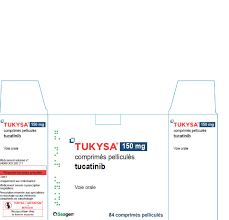
Tucatinib/Tucatinib Instructions
1. Name: tucatinib, tucatinib, tucatinib, TUKYSA
2. Indications:
1. Metastatic breast cancer (MBC): Tucatinib is indicated in combination with trastuzumab and capecitabine for the treatment of adult patients with advanced unresectable or metastatic HER2-positive breast cancer, including patients with brain metastases, who have received one or more prior anti-HER2-based regimens in the metastatic setting.
2. Unresectable or metastatic colorectal cancer (CRC): Tucatinib is indicated in combination with trastuzumab for the treatment of adult patients with RAS wild-type, HER2-positive, unresectable or metastatic colorectal cancer who have progressed after fluoropyrimidine-, oxaliplatin-, and irinotecan-based chemotherapy.
3. Usage and dosage:
1. Before treatment: Select tucatinib to treat patients with unresectable or metastatic colorectal cancer based on the following conditions, including HER2 overexpression or gene amplification, and RAS wild type.
2. Recommended dose: The recommended dose of tucatinib is 300 mg orally twice daily until disease progression or unacceptable toxicity occurs. Tucatinib is used in combination with trastuzumab and capecitabine. The recommended dose of capecitabine is 1000 mg/m2, taken orally twice daily within 30 minutes after meals. Medication must follow clinical guidelines.
3. Medication management: It is recommended that patients swallow tucatinib tablets whole and do not chew, crush or separate them before swallowing; patients should not take broken, cracked or other incomplete tablets; patients should take them approximately 12 hours apart, and take them at the same time every day with or without meals. If a patient vomits or misses a dose of tucatinib, the next dose can be taken at the scheduled time.
4. Dosage adjustment: Patients may experience adverse reactions during treatment with tucatinib. Doctors may adjust the drug dosage. The first dose can be reduced to 250 mg orally twice a day, the second dose can be reduced to 200 mg orally twice a day, and the third dose can be reduced to 150 mg orally twice a day. Patients who cannot tolerate 150 mg orally twice a day should permanently discontinue or reduce the dose.
(1) Patients with Severe Hepatic Impairment: For patients with severe hepatic impairment (Child-Pugh C), reduce the recommended dose to 200 mg orally twice daily.
(2) Drug interactions: Avoid using strong CYP2C8 inhibitors with tucatinib. If this cannot be avoided, reduce the recommended dose to 100 mg orally twice daily. After discontinuing a strong CYP2C8 inhibitor for 3 elimination half-lives, resume the dose you were taking before using the inhibitor.
4. Adverse reactions:
In the clinical study of tucatinib,the most common adverse reactions in MBC patients were diarrhea, palmoplantar red blood cell paresthesia, nausea, hepatotoxicity, vomiting, stomatitis, decreased appetite, anemia and rash; the most common adverse reactions in CRC patients were span> Diarrhea, fatigue, rash, nausea, abdominal pain, infusion-related reactions, and fever; the most common laboratory abnormalities are increased creatinine, increased glucose, increased transaminases, decreased hemoglobin, increased bilirubin, increased alkaline phosphatase, decreased lymphocytes, decreased albumin, decreased leukocytes, and decreased sodium.
5. Storage:
Tucatinib is provided as yellow film-coated round tablets, stored at controlled room temperature, 20°C to 25°C (68°F to 77°F); allowed excursion range is 15°C to 30°C (59°F to 86°F). Distribute to patients only in original containers. Store in original container, protected from moisture. Please close the lid after each opening. Do not discard the desiccant. Once opened, use within 3 months. Throw away any unused tablets 3 months after opening.
6. Mechanism of action:
Tucatinib is a tyrosine kinase inhibitor of HER2. In vitro, tucatinib inhibits the phosphorylation of HER2 and HER3, thereby inhibiting downstream MAPK and AKT signaling and cell proliferation, and displays anti-tumor activity in HER2-expressing tumor cells. In vivo, tucatinib inhibits the growth of HER2-expressing tumors. The combination of tucatinib and trastuzumab showed enhanced antitumor activity in vitro and in vivo compared to either drug alone.
[ 免责声明 ] 本页面内容来自公开渠道(如FDA官网、Drugs官网、原研药厂官网等),仅供持有医疗专业资质的人员用于医学药学研究参考,不构成任何治疗建议或药品推荐。所涉药品可能未在中国大陆获批上市,不适用于中国境内销售和使用。如需治疗,请咨询正规医疗机构。本站不提供药品销售或代购服务。


