
.jpeg)
Can tucatinib/tucatinib completely prevent breast cancer metastasis?
Tucatinib/Tucatinib, as a highly effective HER2-specific targeting drug, has enjoyed a high reputation among the medical community and patients since it was approved by the U.S. Food and Drug Administration (FDA) for the treatment of advanced unresectable or metastatic breast cancer (mBC) in April 2020. Through verification in preclinical and phase I clinical trials, tucatinib not only shows significant anti-cancer activity as a single drug, but its efficacy is further improved when used in combination with chemotherapy drugs or trastuzumab.
However, although tucatinib has achieved impressive results in the treatment ofHER2-positive breast cancer, it is not 100% guaranteed to prevent tumor metastasis. In fact, even if the primary tumor is effectively suppressed under the control of drugs such as tucatinib, there may still be individual cancer cells that escape the restraints of the drug and form new metastases in other locations.
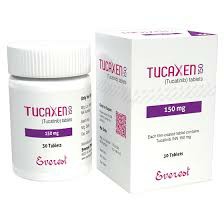
The risk of tumor metastasis is affected by a variety of complex factors, including but not limited to individual differences in patients, tumor stage and pathological type. Tumors from different patients vary significantly in growth rate, invasiveness, and response to drugs. Therefore, it cannot be simply assumed that taking tucatinib can completely eliminate the possibility of tumor metastasis.
In addition, the therapeutic effect of tucatinib is also precisely controlled by the method and dosage of the drug. In order to ensure the best efficacy and safety of the drug, patients must strictly follow the doctor's instructions and must not change the dosage or stop the drug at will. Otherwise, it may not only affect the efficacy of the drug, but also increase the risk of tumor metastasis.
[ 免责声明 ] 本页面内容来自公开渠道(如FDA官网、Drugs官网、原研药厂官网等),仅供持有医疗专业资质的人员用于医学药学研究参考,不构成任何治疗建议或药品推荐。所涉药品可能未在中国大陆获批上市,不适用于中国境内销售和使用。如需治疗,请咨询正规医疗机构。本站不提供药品销售或代购服务。


