
.jpeg)
Potential application of venetoclax/venetoclax in the treatment of myeloma
Venetoclax/Venetoclax, as an innovative BCL-2 inhibitor, achieves anti-tumor effects by activating the apoptosis pathway of tumor cells. Myeloma, a malignant tumor caused by excessive secretion of monoclonal immunoglobulin light chains, has typical symptoms including bone destruction and impaired kidney function. However, the use of venetoclax in the treatment of myeloma is not set in stone and needs to be evaluated on an individual patient basis.
It is worth noting that although venetoclax has excellent performance in the treatment of hematological malignancies such as chronic lymphocytic leukemia and acute myeloid leukemia, by specifically binding to B-cell lymphoma 2 (Bcl-2) protein to block its activity, thus inducing the apoptosis of cancer cells, it currently does not directly demonstrate significant anti-tumor activity in the treatment of myeloma.
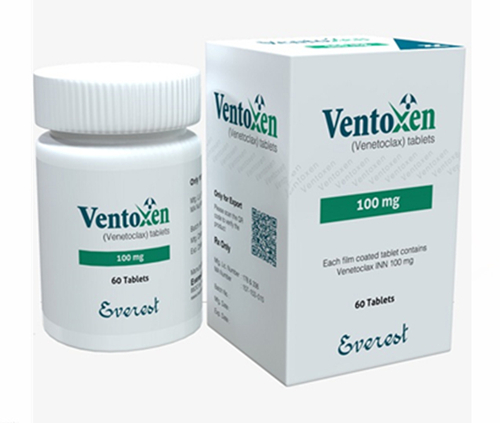
Regarding the dosage of venetoclax, clinical guidelines recommend the following: When treating chronic lymphocytic leukemia/small lymphocytic lymphoma (CLL/SLL), the starting daily dose of venetoclax is 20 mg, and gradually increases to 400 mg over the next five weeks (the escalation schedule is: 20 mg in the first week, 50 mg in the second week, 100 mg in the third week, and increase to 200 mg in the fourth week, and maintain this dose). When treating acute myeloid leukemia (AML), the starting dose is 100 mg, and then rapidly increased to 400 mg within three days (i.e. 100 mg on the first day, 200 mg on the second day, and 400 mg on the third day).
Importantly, however, these recommended dosages are for reference only, and actual dosages should be adjusted based on the patient's specific condition and the professional advice of a physician. For patients with myeloma, venetoclax may not be a first-line treatment.
[ 免责声明 ] 本页面内容来自公开渠道(如FDA官网、Drugs官网、原研药厂官网等),仅供持有医疗专业资质的人员用于医学药学研究参考,不构成任何治疗建议或药品推荐。所涉药品可能未在中国大陆获批上市,不适用于中国境内销售和使用。如需治疗,请咨询正规医疗机构。本站不提供药品销售或代购服务。


