
.jpeg)
capmatinib and tepotinib
Capmatinib (Capmatinib) and Tepotinib (Tepotinib) are both MET tyrosine kinase inhibitors that target the MET tyrosine kinase receptor, including variants resulting from exon 14 skipping. They work by blocking signals from activated MET receptors. Capmatinib and tepotinib both have excellent efficacy and very similar side effects. The biggest factor that differentiates them is their dosage. Capmatinib is administered twice daily, while tepotinib is administered once daily.
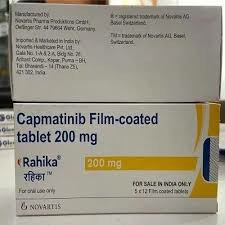
The U.S. Food and Drug Administration (FDA) approved capmatinib and tepotinib on May 6, 2020 and February 3, 2021, respectively. Capmatinib is indicated for patients with metastatic non-small cell lung cancer (mNSCLC) whose tumors have mutations causing mesenchymal-to-epithelial transition (MET) exon 14 skipping as detected by an FDA-approved test. Tepotinib is indicated for mNSCLC harboring MET exon 14 skipping alterations. These approvals were based on trials GEOMETRY mono-1 (capmatinib) and VISION (tepotinib).
In theGEOMETRY mono-1 study, the overall response rate (ORR) of 28 treatment-naïve patients was 68%, and the median duration of response (DoR) was 12.6 months. The median duration of response (ORR) of 69 patients with previously treated non-small cell lung cancer gene mutations was 41%, and the median DoR was 9.7 months.
In theVISION study, the ORR/BIRC of 69 treatment-naive patients was 43%, with a median DoR of 10.8 months; the ORR of 83 previously treated patients with non-small cell lung cancer carrying MET exon 14 mutations was 43%, with a median DoR of 11.1 months. These are the first two therapies approved by the FDA specifically for patients with MET exon 14 skipped metastatic non-small cell lung cancer.
[ 免责声明 ] 本页面内容来自公开渠道(如FDA官网、Drugs官网、原研药厂官网等),仅供持有医疗专业资质的人员用于医学药学研究参考,不构成任何治疗建议或药品推荐。所涉药品可能未在中国大陆获批上市,不适用于中国境内销售和使用。如需治疗,请咨询正规医疗机构。本站不提供药品销售或代购服务。


