
.jpeg)
The diverse applications of capmatinib and its involved fields
Capmatinib (Capmatinib), as a revolutionary drug, is the first targeted therapy targeting the MET gene (especially exon 14 mutations). Its unique efficacy was driven by positive results from the GEOMETRY mono-1 trial, which reported significant efficacy in May 2020, prompting rapid approval by the U.S. Food and Drug Administration (FDA) for the treatment of metastatic non-small cell lung cancer with exon 14 skipping mutations. Two years later, in August 2022, capmatinib was officially approved by the FDA under the trade name Tabrecta.
From the perspective of clinical pharmacology, capmatinib is a highly efficient and highly selective cMET small molecule inhibitor. Its oral administration method makes it more convenient for patients to use. The drug exhibits significant anti-tumor properties in both in vitro and in vivo solid tumor models. Compared with crizotinib, capmatinib is 30 times more potent, with IC50 values u200bu200bof 0.13nmol/L and 4nmol/L respectively, and is slightly better than tipotinib, with an IC50 value of approximately 1.7nmol/L.
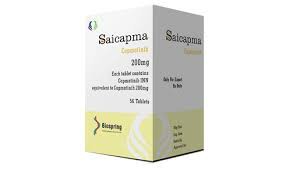
When capmatinib is taken orally, its peak plasma concentration (Cmax) can be quickly reached within 1-2 hours, and the oral absorption rate of the drug exceeds 70%, showing good bioavailability. It is worth mentioning that there was no significant impact on Cmax or capmatinib exposure (AUC 0-12 hours) in either the postprandial or fasting state, which provides patients with more flexibility in their medication. In addition, capmatinib is mainly bound to proteins in the circulation (the binding rate is as high as 96%), and its half-life is approximately 6.5 hours, which means that the drug can maintain a stable concentration in the body for a long time.
In terms of efficacy, capmatinib not only demonstrates excellent anti-tumor activity, but also shows impressive results in patients with non-small cell lung cancer containingMET exon 14 skipping mutations. Among patients who had received one or two prior treatments, the overall response rate (ORR) was 41%, and among previously untreated patients, the ORR was as high as 68%. This remarkable efficacy prompted the FDA to approve the drug for this indication. In addition, capmatinib has also shown certain therapeutic effects in patients with MET gene amplification and gene copy number of 10 or higher, although its activity may be relatively weak.
In general, capmatinib, as a highly efficient and highly selectivecMET small molecule inhibitor, has demonstrated excellent efficacy and broad application prospects in the treatment of non-small cell lung cancer. It not only achieved significant therapeutic effects in patients with MET exon 14 skipping mutations, but also showed potential therapeutic value in patients with other MET gene mutations.
[ 免责声明 ] 本页面内容来自公开渠道(如FDA官网、Drugs官网、原研药厂官网等),仅供持有医疗专业资质的人员用于医学药学研究参考,不构成任何治疗建议或药品推荐。所涉药品可能未在中国大陆获批上市,不适用于中国境内销售和使用。如需治疗,请咨询正规医疗机构。本站不提供药品销售或代购服务。


