
.jpeg)
The relationship between lorlatinib/lorlatinib and API 3922
Lorlatinib Lorlatinib is a cutting-edge third-generation ALK inhibitor whose significant central nervous system penetration makes it unique in the treatment of lung cancer. Its chemical structure contains a specific CAS number of 1454846-35-5. It was known as PF-06463922 during the clinical trial stage, and its precise structural formula is expressed as C21H19FN6O2. It is worth mentioning that the purity of this API is as high as over 99.9%, and is accompanied by a detailed HPLC spectrum for verification. Today, lorlatinib is widely known under the English name Lorlatinib and the trade name Lorbrena, and has a place in the market.
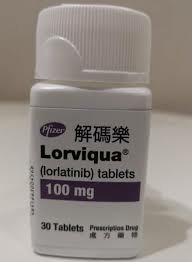
Lorlatinib, a tyrosine kinase inhibitor (TKI), has shown excellent results in treating certain types of lung cancer. It was originally developed to deal with anaplastic large cell lymphoma (ALCL) and non-small cell lung cancer (NSCLC, especially ALK-positive cases). The drug precisely targets the anaplastic kinase (ALK) fusion gene, which is present in about 5% of patients with non-small cell lung cancer and causes abnormal cell proliferation. By blocking the ALK signaling pathway, lorlatinib effectively inhibits the growth and spread of tumor cells.
The results of clinical studies are encouraging, showing that lorlatinib can significantly improve patients' progression-free survival (PFS) and overall survival (OS), and its side effects are significantly reduced compared with traditional chemotherapy. Although, like all drugs, lorlatinib may cause some adverse effects, such as diarrhea, fatigue, nausea, and vision problems, most patients can effectively manage these symptoms by adjusting the drug dose or using adjuvant medications.
[ 免责声明 ] 本页面内容来自公开渠道(如FDA官网、Drugs官网、原研药厂官网等),仅供持有医疗专业资质的人员用于医学药学研究参考,不构成任何治疗建议或药品推荐。所涉药品可能未在中国大陆获批上市,不适用于中国境内销售和使用。如需治疗,请咨询正规医疗机构。本站不提供药品销售或代购服务。


