
.jpeg)
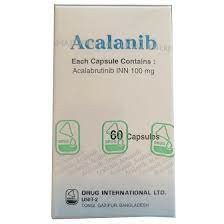
Detailed Medication Guide for Acalatinib/Acalatinib Capsules
1. Treatment scope and objects:
1) Treatment of mantle cell lymphoma (MCL): Acotinib is particularly suitable for adult patients with mantle cell lymphoma who have undergone at least one treatment.
2) Chronic lymphocytic leukemia (CLL) or small lymphocytic lymphoma (SLL) treatment: This drug is also suitable for adult patients with chronic lymphocytic leukemia or small lymphocytic lymphoma.
2. Medication methods and dosage recommendations:
1) Recommended dosage:
Monotherapy: For patients with MCL, CLL, or SLL, acotinib 100 mg orally is recommended every 12 hours until disease progression or intolerable side effects occur.
Combination medication: When used in combination with otuzumab, for patients with previously untreatedCLL or SLL, it is also recommended to take 100mg orally every 12 hours until the disease progresses or serious side effects occur. Treatment begins with the first cycle (each cycle is 28 days). Starting from the second cycle, otuzumab treatment was added and continued for six cycles. Please refer to its prescribing information for specific dosage. If both drugs are taken on the same day, acotinib should be taken before otuzumab.
2) Medication Tips: Patients should swallow the capsules whole with water and avoid opening, crushing or chewing. Acotinib can be taken with food or alone. If you miss a dose by more than 3 hours, skip the dose and take the next dose at the originally scheduled time. Taking missed doses is not recommended.
3. Possible side effects:
In clinical trials of acotinib,Common side effects (≥20%) in patients with MCL included anemia, thrombocytopenia, headache, neutropenia, diarrhea, fatigue, myalgia, and bruising. Joint pain, dizziness, and constipation are also common in people with CLL or SLL.
4. Drug supply and storage recommendations:
Acotinib capsules, each containing100 mg of active ingredient, are recommended to be stored at 20°C to 25°C (68°F to 77°F), and the allowed temperature range is 15°C to 30°C (59°F to 86°F).
5. Precautions for use in specific patient groups:
1) Female patients: The use of acotinib by pregnant women may cause harm to the fetus and increase the difficulty of delivery. It is recommended that women of childbearing potential use effective contraception during treatment and for at least one week after discontinuation of treatment. Breastfeeding women should suspend breastfeeding during treatment and for at least two weeks after stopping the drug.
2) Patients with impaired hepatic function: Patients with severe hepatic impairment should not use acotinib. Safety has not been evaluated in patients with moderate or severe hepatic impairment.
6. Principle of drug action:
Acotinib is a small moleculeBTK inhibitor. It forms a covalent bond with the cysteine u200bu200bresidue in the active site of BTK through its active metabolite ACP-5862, thereby effectively inhibiting BTK enzyme activity. BTK is an important signaling molecule in the B cell antigen receptor and cytokine receptor pathways. In B cells, BTK signaling plays a regulatory role in key processes such as cell proliferation, migration, chemotaxis, and adhesion. In preliminary studies, acotinib was shown to inhibit the activation of BTK-mediated signaling proteins CD86 and CD69, and inhibited the proliferation of malignant B cells and tumor growth in mouse xenograft models.
[ 免责声明 ] 本页面内容来自公开渠道(如FDA官网、Drugs官网、原研药厂官网等),仅供持有医疗专业资质的人员用于医学药学研究参考,不构成任何治疗建议或药品推荐。所涉药品可能未在中国大陆获批上市,不适用于中国境内销售和使用。如需治疗,请咨询正规医疗机构。本站不提供药品销售或代购服务。


