
.jpeg)
Acalatinib/Acalatinib Capsules: Detailed explanation of the mechanism of action and efficacy in highly effective treatment of lymphoma
Acalabrutinib/Acalabrutinib, as a cutting-edge anti-tumor drug, belongs to the important drug category of Bruton's tyrosine kinase (BTK) inhibitors. BTK, as a key protease in the body, plays a vital role in the B cell signaling process. By precisely inhibiting the activity of BTK, acotinib can effectively curb the growth and survival of cancer cells.
Clinically, acotinib is mainly used to treat specific types of non-Hodgkin lymphoma, including small cell lymphocytic carcinoma and mantle cell lymphoma, and is also suitable for the treatment of chronic lymphocytic leukemia. When traditional treatment methods cannot control disease progression or fail, acotinib is often used as an important choice for maintenance treatment and has demonstrated significant therapeutic effects.
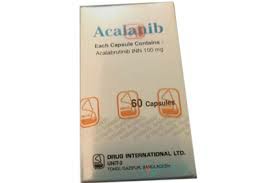
In-depth exploration of its mechanism of action revealed that acotinib effectively inhibits BTK enzyme activity by forming a stable covalent bond with the cysteine residue (Cys481) in the active site of BTK. In this process, acotinib and its active metabolite ACP-5862 play a key role. Through this inhibitory effect, acotinib can block the downstream signaling pathway mediated by BTK, thereby inhibiting the proliferation and survival of malignant B cells.
It is worth mentioning that compared with the first-in-classBTK inhibitor ibrutinib, acotinib is known as the second-generation BTK inhibitor. This is due to its higher selectivity and inhibitory effect on BTK, while having minimal or no impact on the activities of other kinases such as ITK, EGFR, etc. This high selectivity allows acotinib to theoretically exhibit fewer side effects, as its off-target effects are minimized, thus providing patients with a safer and more effective treatment option.
[ 免责声明 ] 本页面内容来自公开渠道(如FDA官网、Drugs官网、原研药厂官网等),仅供持有医疗专业资质的人员用于医学药学研究参考,不构成任何治疗建议或药品推荐。所涉药品可能未在中国大陆获批上市,不适用于中国境内销售和使用。如需治疗,请咨询正规医疗机构。本站不提供药品销售或代购服务。


