
.jpeg)
What is the role and use of Mobotinib?
The role and use of Mobotinib (Mobosetinib) is mainly reflected in the treatment of specific types of lung cancer. The following is a detailed analysis of Mobotinib:
1.Function:
Mobotinib is an innovative targeted therapy drug. Its mechanism of action is mainly by inhibiting the abnormal signaling pathway of epidermal growth factor receptor (EGFR), thereby blocking the growth and reproduction of tumor cells. Specifically, mobotinib has a significant inhibitory effect on EGFR exon 20 insertion mutation (ex20ins). This mutation is quite common in non-small cell lung cancer (NSCLC), and traditional EGFR inhibitors are ineffective in treating it. Mobotinib was developed to solve this problem by specifically inhibiting the abnormal signaling pathways caused by EGFR ex20ins mutations to achieve therapeutic purposes.
In addition, Mobotinib also exhibits potent killing effect on tumor cells and low toxicity on normal cells, which allows it to act more precisely on the target during treatment and reduce damage to healthy tissue.
2.Purpose:
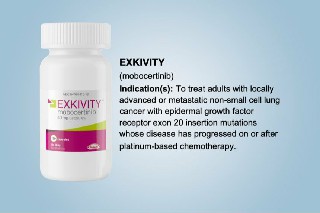
Mobotinib is mainly used to treat non-small cell lung cancer (NSCLC) patients with EGFR exon 20 insertion mutations who have received platinum-containing chemotherapy and have progressed. These patients are usually already in locally advanced or metastatic stages, and traditional treatments such as chemotherapy are often ineffective. Mobotinib provides a new treatment option for these patients.
Clinical study results show that mobotinib has significant efficacy in the treatment of EGFR ex20ins mutated NSCLC patients. In a pivotal clinical study, after long-term follow-up, the median progression-free survival of patients treated with mobotinib (PFS) increased to 7.3 months, which is a significant improvement compared with traditional treatment methods. At the same time, the patient's median overall survival (OS) was also significantly prolonged, reaching 20.2 months. These data fully demonstrate the effectiveness of mobotinib in the treatment of EGFR ex20ins mutated NSCLC patients.
In addition to its remarkable efficacy, mobotinib has a good safety and tolerability profile. In clinical trials, although patients will experience some common adverse reactions, such as diarrhea, rash, etc., most of these reactions are mild to moderate and can be managed through appropriate dose adjustment or symptomatic treatment. Serious adverse reactions are relatively rare, which further enhances the feasibility of mobotinib in clinical applications.
It is worth mentioning that mobotinib is the first and currently the only targeted drug approved for the treatment of EGFR exon 20 insertion mutationsNSCLC. Its emergence not only fills the gap in clinical treatment in this field, but also provides new treatment options and hope for these patients. With the accumulation of clinical experience, mobotinib is expected to extend survival and improve quality of life for more patients.
In general, as a targeted drug that specifically targets EGFR 20 exon insertion mutations, Mobotinib has significant clinical efficacy and good safety and tolerability in the treatment of specific types of lung cancer. Its development and application have brought new treatment methods and hope to patients with non-small cell lung cancer.
[ 免责声明 ] 本页面内容来自公开渠道(如FDA官网、Drugs官网、原研药厂官网等),仅供持有医疗专业资质的人员用于医学药学研究参考,不构成任何治疗建议或药品推荐。所涉药品可能未在中国大陆获批上市,不适用于中国境内销售和使用。如需治疗,请咨询正规医疗机构。本站不提供药品销售或代购服务。


